
Concawe Review
Concawe Reviews
Interview with Dr Mike Spence, Concawe’s Science Executive for Water, Soil and Waste and Oil Pipelines
Mike Spence joined Concawe in 2014. As his work with Concawe draws to a close, Mike shares with us some of the aspects of his work experience as Science Executive over the past four years....
Concawe Reviews
Life-cycle analysis – a look into the key parameters affecting life-cycle CO2 emissions of passengers cars
This article presents the basis of a Concawe analysis comparing the life-cycle CO2 emissions of battery-electric vehicles (BEVs) and internal combustion engine (ICE) vehicles, and investigates the im...
Concawe Reviews
Climate impacts of particulate pollutants emitted from international shipping
A Concawe study aims to provide a better understanding of the uncertainties relating to the climate impacts of international shipping emissions....
Concawe Reviews
A comparison of the impacts of Euro 6 diesel passenger cars and ZEVs on urban air quality compliance
A Concawe study aims to determine how real-driving emissions from the latest Euro 6 diesel passenger cars will impact ambient air quality compliance under different scenarios, and compares the results...
Concawe Reviews
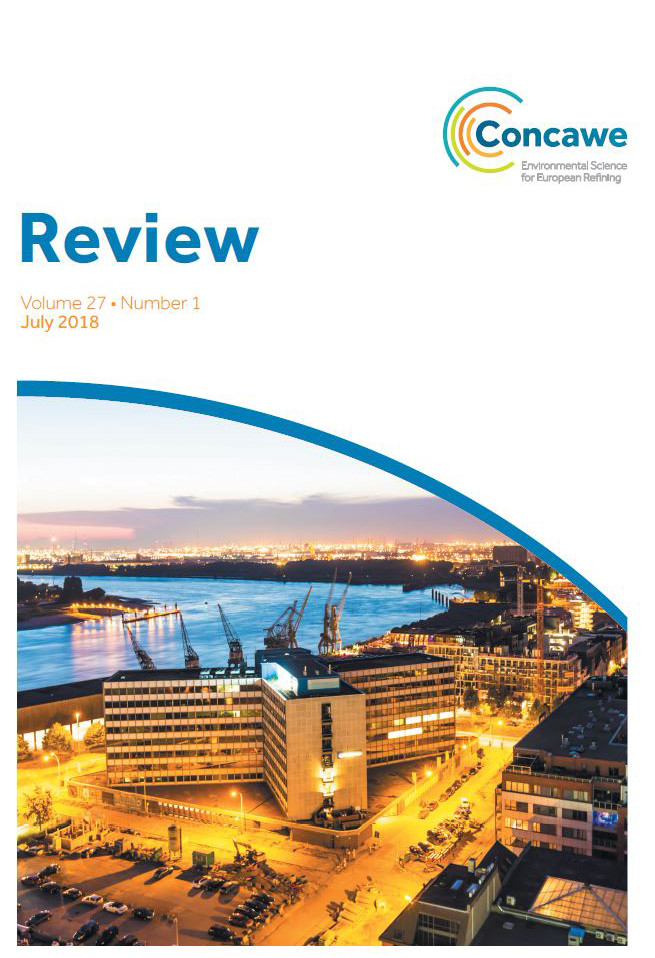
Concawe Review 27.1
As the July 2018 edition of the Concawe Review is about to be published, the news and weather channels are reporting the record high temperatures of summer 2018, providing further evidence of climate...
Concawe Reviews
The low-dose benzene debate needs a sharp blade
The health effects of benzene have been a major concern for regulators and health experts for many years. This has led to significantly lower regulatory threshold limits (such as occupational exposure...
Concawe Reviews
The EU refining industry and the challenge of the IMO global sulphur limit for bunker fuels
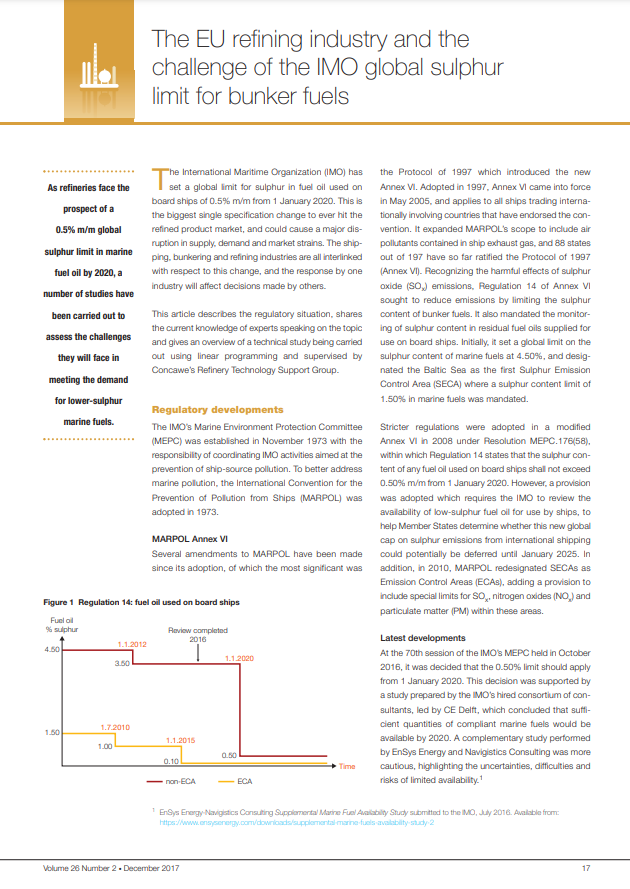
As refineries face the prospect of a 0.5% m/m global sulphur limit in marine fuel oil by 2020, a number of studies have been carried out to assess the challenges they will face in meeting the demand f...
Concawe Reviews
New Concawe web-based water use/effluent quality survey
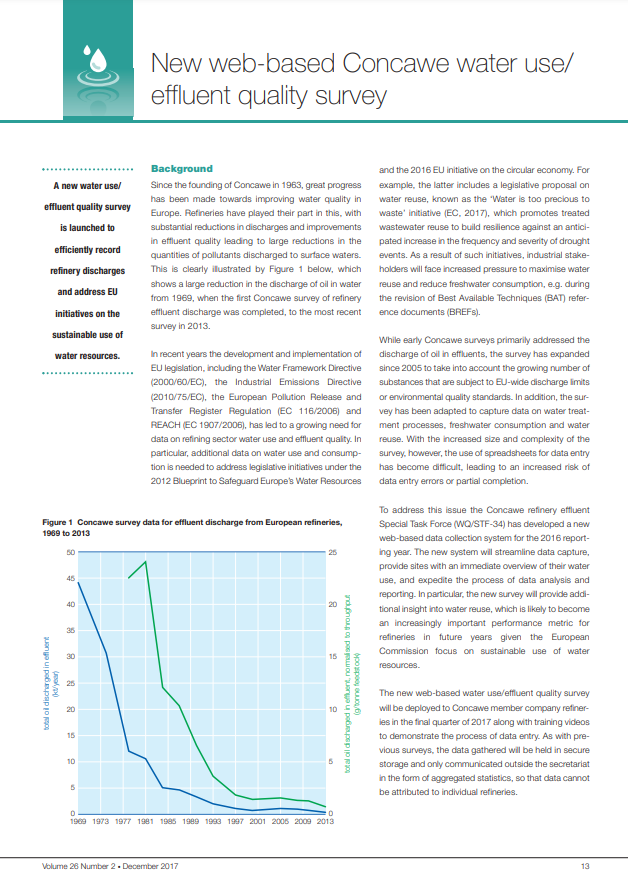
A new survey aims to address EU initiatives on the sustainable use of water resources. In recent years the development and implementation of EU legislation, including the Water Framework Directive, th...
Concawe Reviews
Concawe Safety Management Group: strategy review
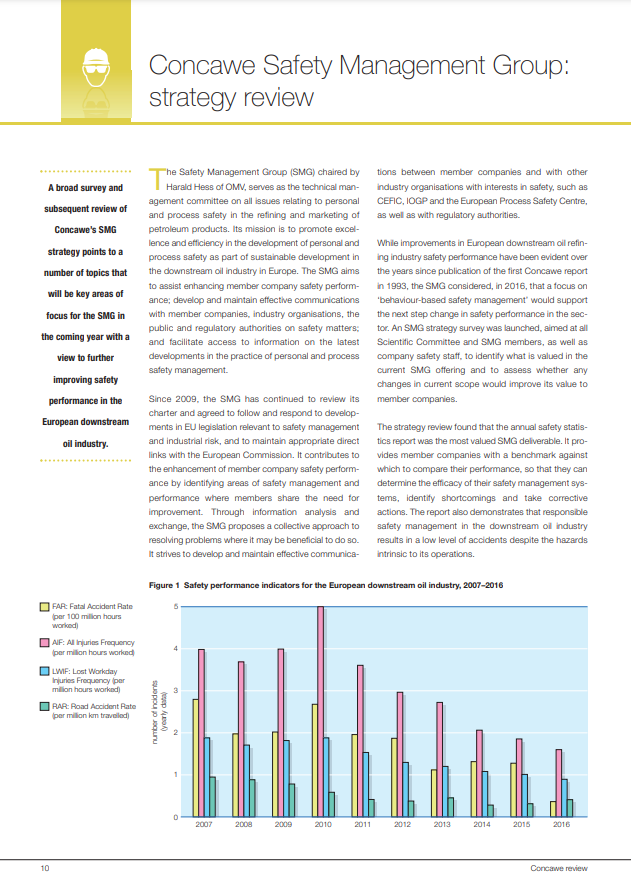
Improvement in European downstream oil refining industry safety performance is evident over the years since the first Concawe safety report in 1993. However, the Safety Management Group (SMG) recognis...
Concawe Reviews
Recent studies on real driving emissions of diesel passenger cars
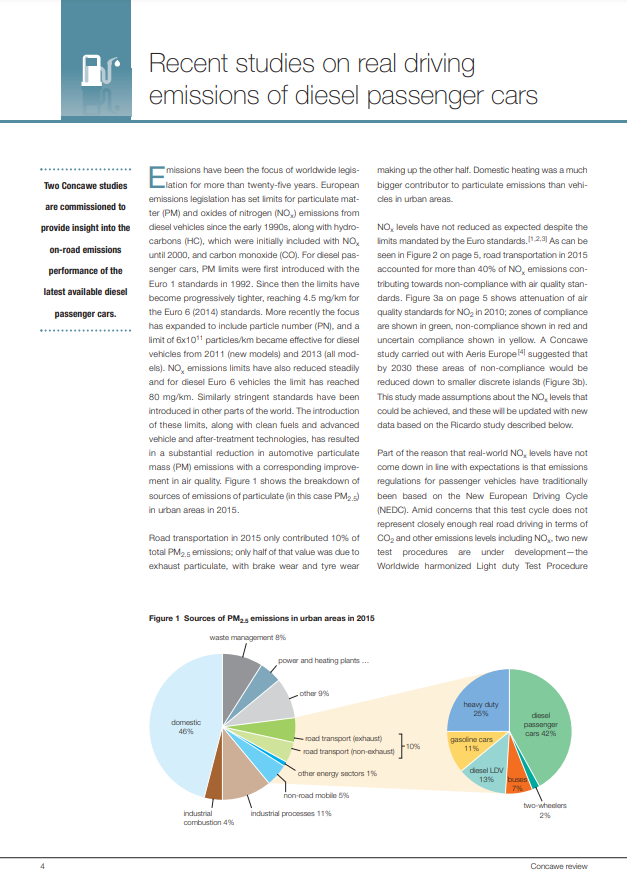
Real driving emissions (RDE) from passenger cars has come under close scrutiny in recent times due to a perceived divergence between stated certification and measured on-road performance. This has bee...
Concawe Reviews
Concawe Review 26.2
Three of the five articles in this edition of the Review once again illustrate the prescience of the founders of an Association working on the ‘Conservation of Clean Air and Water in Europe’ back...
Concawe Reviews
European cross-country oil pipelines
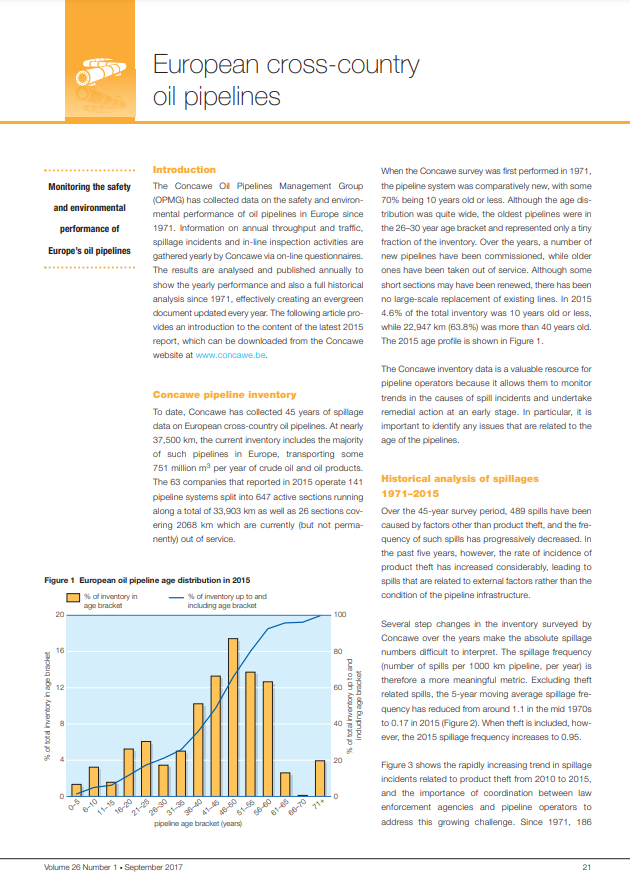
The Concawe Oil Pipelines Management Group (OPMG) has collected data on the safety and environmental performance of oil pipelines in Europe since 1971. Information on annual throughput and traffic, sp...
Concawe Reviews
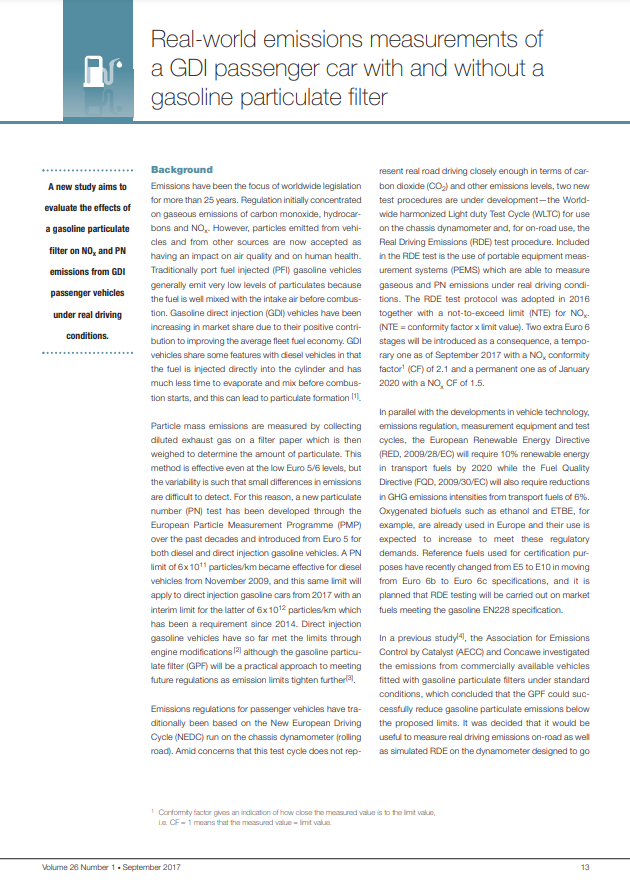
Real-world emissions measurements of a GDI passenger car with and without a gasoline particulate filter
A new study aims to evaluate the effects of a gasoline particulate filter on NOx and PN emissions from GDI passenger vehicles under real driving conditions. Emissions have been the focus of worldwide...
Concawe Reviews
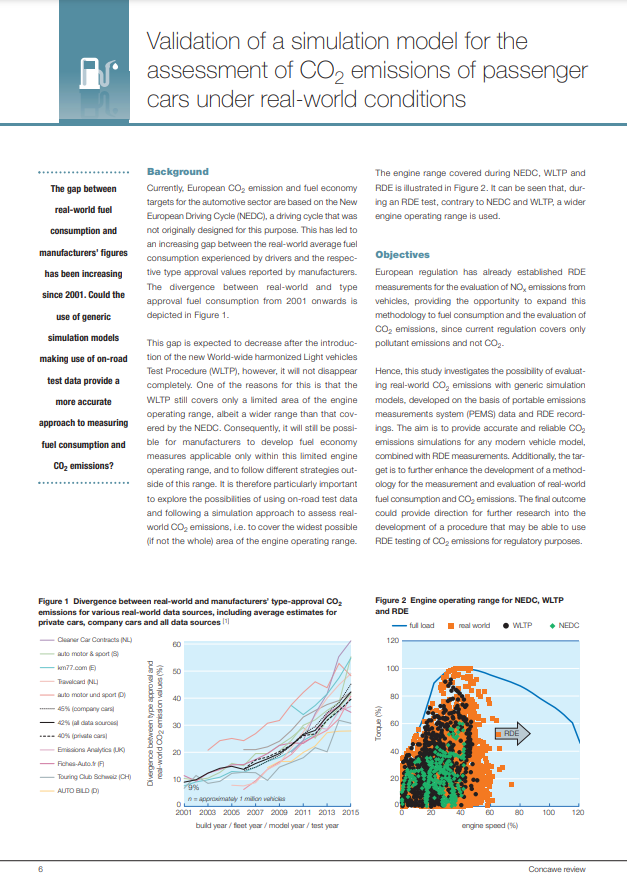
Validation of a simulation model for the assessment of CO2 emissions of passenger cars under real-world conditions
The gap between real-world fuel consumption and manufacturers’ figures has been increasing since 2001. Could the use of generic simulation models making use of on-road test data provide a more accurate approach to measuring fuel consumption and CO2 emissions?
Concawe Reviews
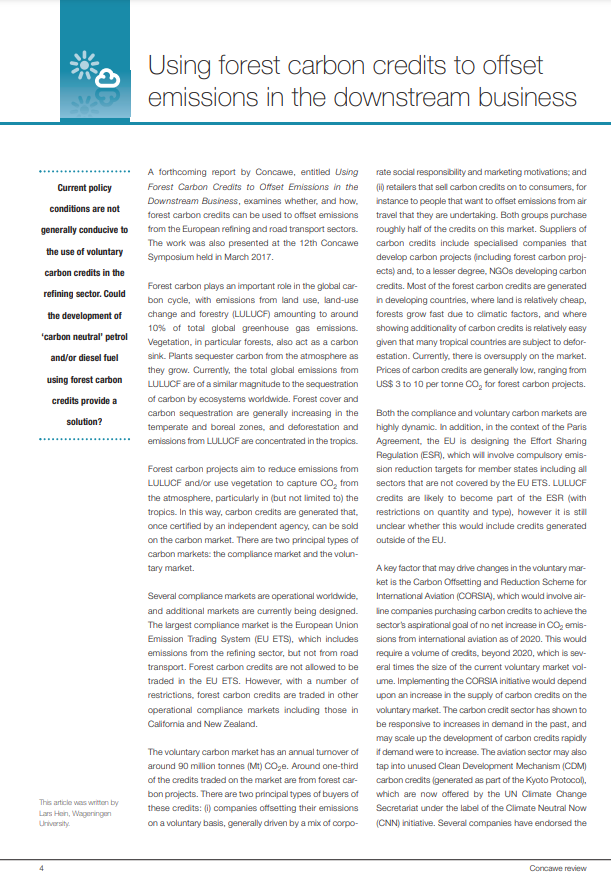
Using forest carbon credits to offset emissions in the downstream business
Current policy conditions are not generally conducive to the use of voluntary carbon credits in the refining sector. Could the development of ‘carbon neutral’ petrol and/or diesel fuel using forest carbon credits provide a solution?

Concawe Reviews
Concawe Review 26.1
Find out the articles of this Concawe Review:
Using forest carbon credits to offset emissions in the downstream business. Could forest carbon credits become a viable trading option for the EU ref...
Concawe Reviews
Concawe Review Special Symposium Edition
The future of the transport system
Drive trains and fuels for road transport, Neville Jackson (Ricardo)
Challenges for hybridisation and electrification of vehicles as a route to decarbonisati...
Concawe Reviews
Concawe Review 25.2
Contents of this Concawe Review:
A review of REACH registration for petroleum substances in 2016. Addressing the tensions that REACH presents for the regulatory compliance industry
Cat-App: ca...
Concawe Reviews
A review of REACH registration for petroleum substances in 2016
Ten years on — addressing the tensions that the REACH regulation has created for the regulatory compliance community....
Concawe Reviews
Downstream oil industry safety statistics for 2015
The 2015 safety statistics report presents data on personal injures and process safety, highlighting trends over the past 22 years of data collection....
Concawe Reviews
Optical gas imaging: from qualitative to quantitative
New technology capable of quantifying fugitive emissions using infrared imaging may eventually serve as a full replacement for Method 21....

Concawe Reviews
Concawe Review 25.1
These are the contents on this Concawe Review:
The impact of emission reduction scenarios on air quality limit values. A study of the air quality compliance issues for PM and NO
Effect of fuel...
Concawe Reviews
Concawe Review 24.2
Find out the contents of this Concawe Review:
Estimating the forward cost of EU legislation for the EU refining industry;
Estimating the marginal CO2 footprints of refinery products;
Natu...
Concawe Reviews
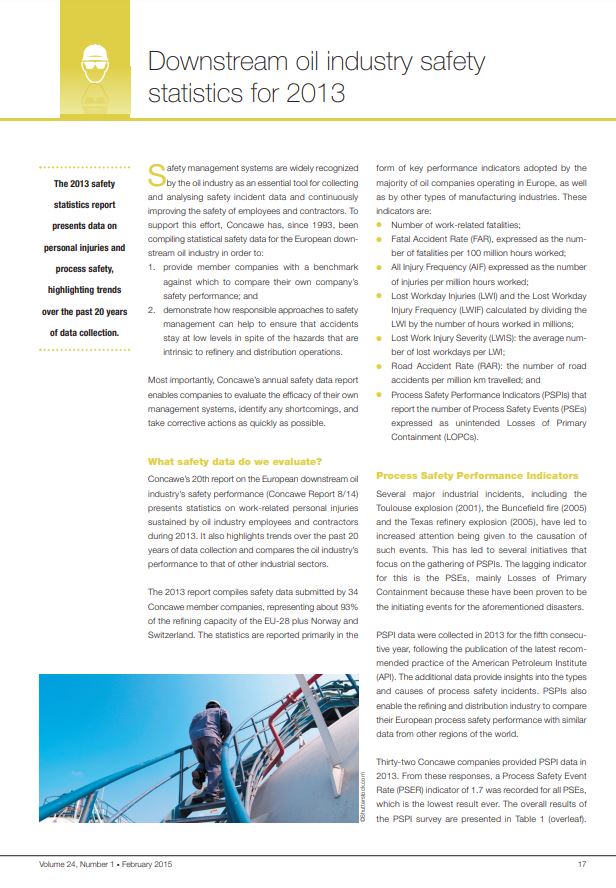
Downstream oil industry safety statistics for 2013
Safety management systems are widely recognized by the oil industry as an essential tool for collecting and analysing safety incident data and continuously improving the safety of employees and contra...