
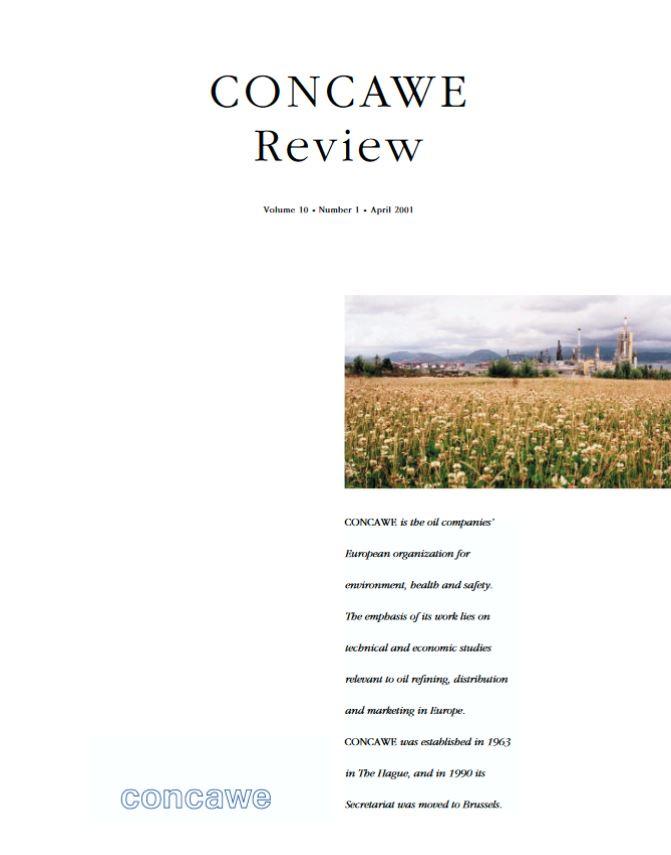
Concawe Review
Concawe Reviews
Non-road diesel
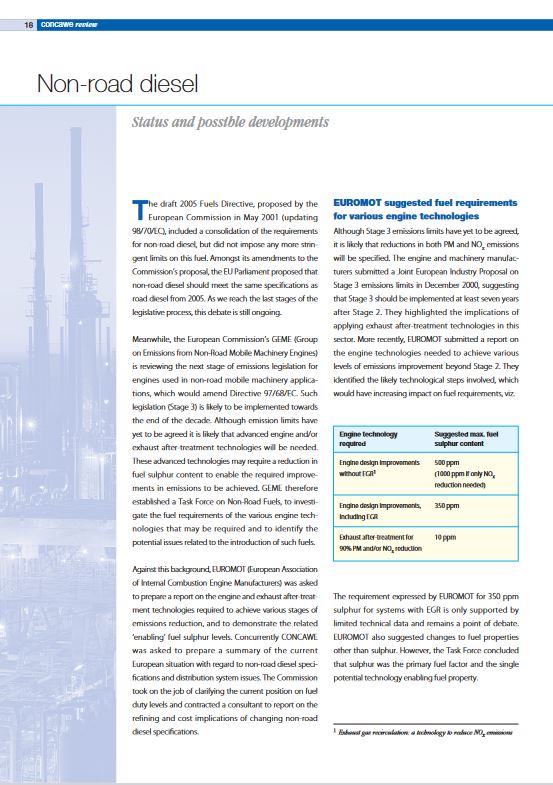
The draft 2005 Fuels Directive, proposed by the European Commission in May 2001 (updating 98/70/EC), included a consolidation of the requirements for non-road diesel, but did not impose any more st...
Concawe Reviews
SO2 emissions from ships in Europe
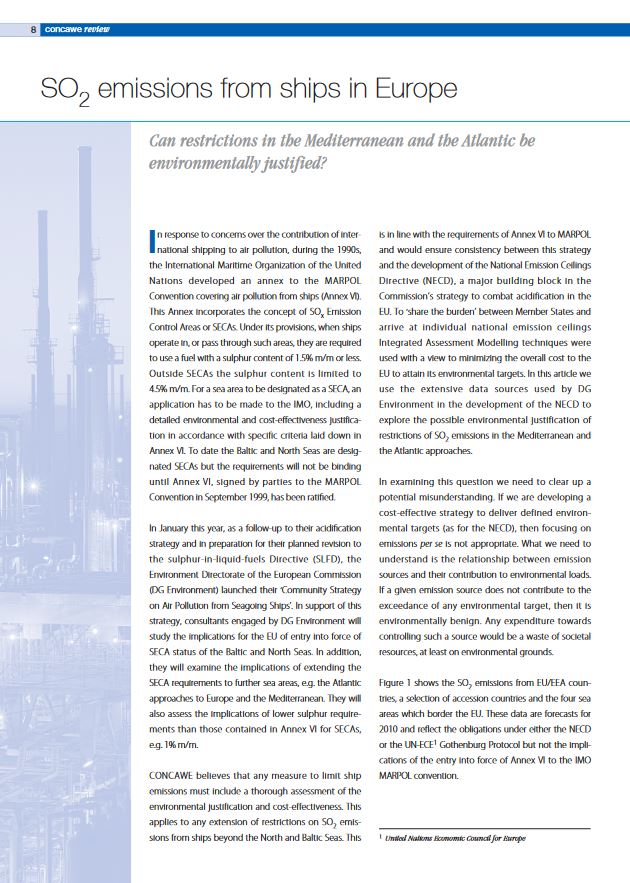
In response to concerns over the contribution of international shipping to air pollution, during the 1990s, the International Maritime Organization of the United Nations developed an annex to the MARP...
Concawe Reviews
The refinery BAT reference document
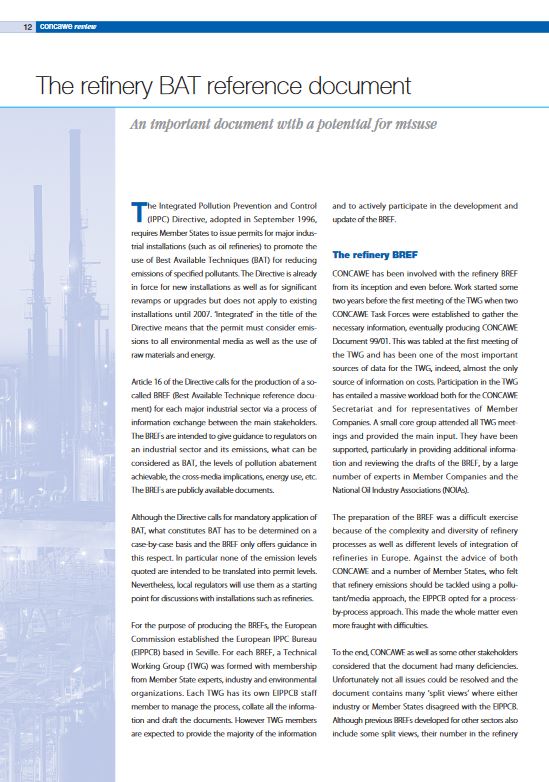
The Integrated Pollution Prevention and Control (IPPC) Directive, adopted in September 1996, requires Member States to issue permits for major industrial installations (such as oil refineries) to p...
Concawe Reviews
Western European oil pipelines
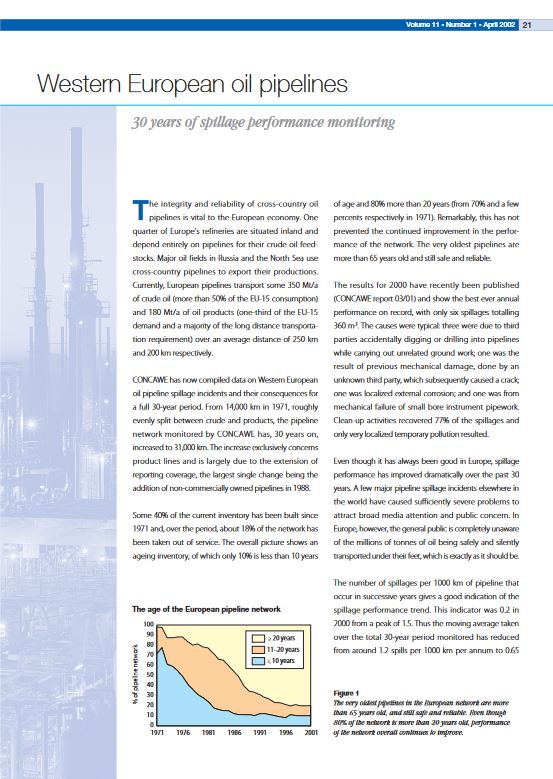
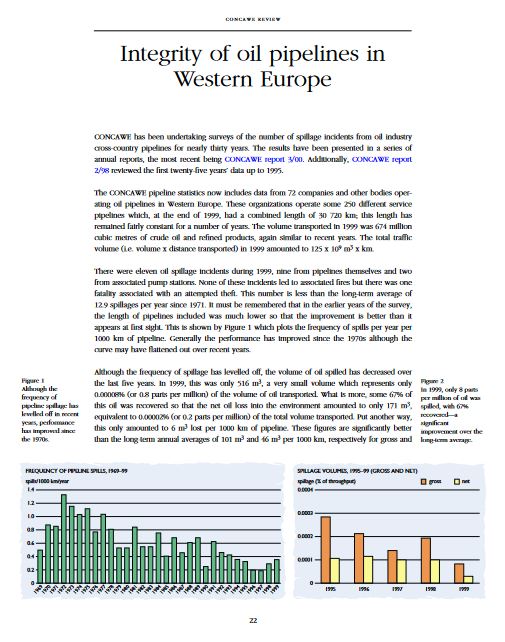
The integrity and reliability of cross-country oil pipelines is vital to the European economy. One quarter of Europe’s refineries are situated inland and depend entirely on pipelines for their cr...
Concawe Reviews
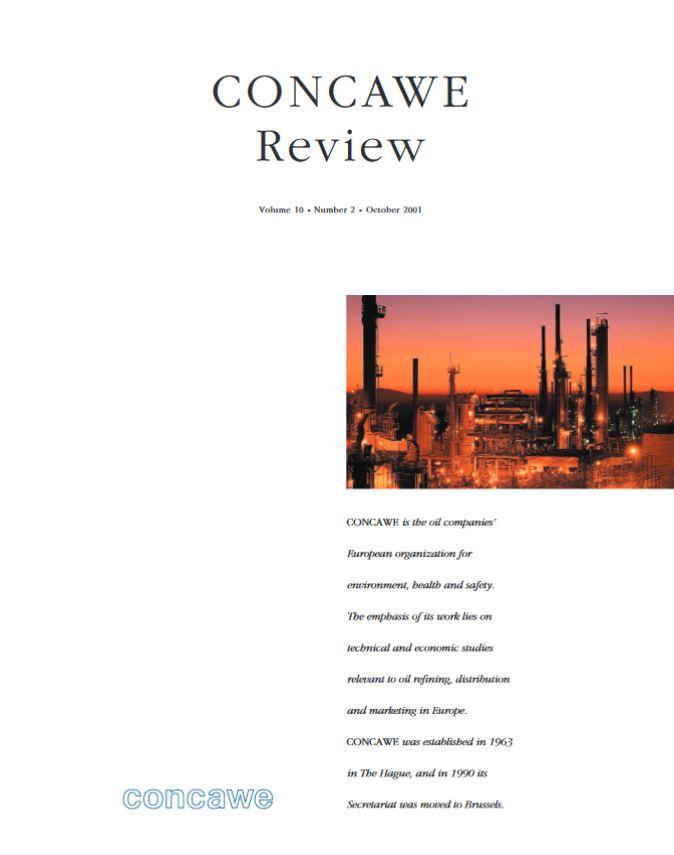
CONCAWE Review – Autumn 2001
Volume 10 • Number 2: For nearly forty years, CONCAWE has endeavoured to provide the Community with technically sound information and studies in the field of environment and health related to the do...
Concawe Reviews
CEC reorganization
The Coordinating European Council (CEC) is the inter-industry body in charge of developing standardized European performance tests for fuels and lubricants.
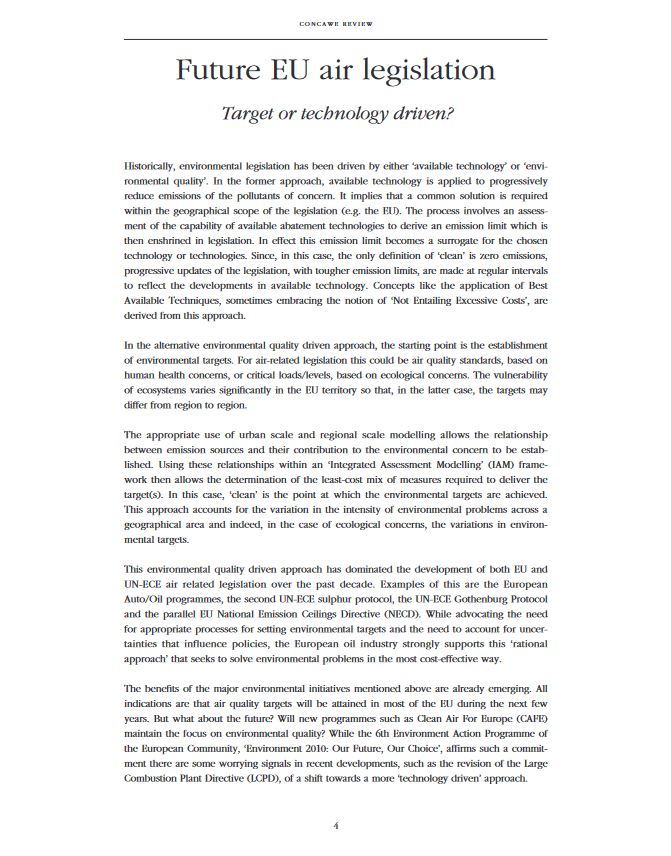
A detailed review of CEC operations, car...
Concawe Reviews
Future EU air legislation
Historically, environmental legislation has been driven by either ‘available technology’ or ‘environmental quality’. In the former approach, available technology is applied to progressively ...
Concawe Reviews
Hydrogen
The concerns about global warming and greenhouse effect have, quite justifiably, fueled the search for ‘carbon-free’ energy sources to curb CO2 emissions. Road transport is a major user of energy...
Concawe Reviews
The potential of Whole Effluent Assessment
To date effluent discharges have largely been assessed and regulated on the basis of physical and chemical properties, such as chemical oxygen demand (COD), biological oxygen demand (BOD), suspended...
Concawe Reviews
The revised Large Combustion Plant Directive
Following the completion of the formal ‘conciliation procedure’ of the EU Institutions, a joint text for the revision of the 1988 Directive (88/609/EEC) on ‘the limitation of emissions of certa...
Concawe Reviews
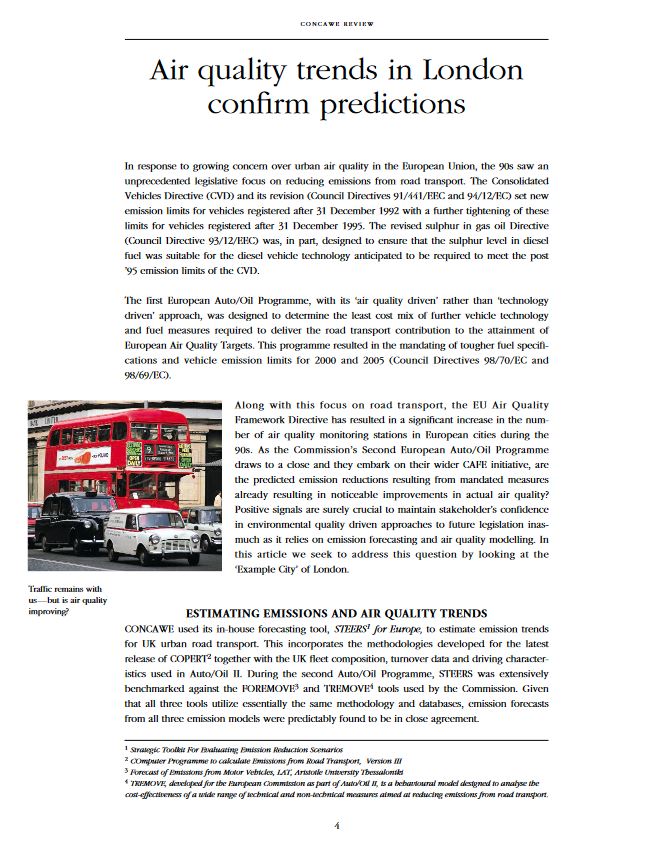
Air quality trends in London confirm predictions
In response to growing concern over urban air quality in the European Union, the 90s saw an unprecedented legislative focus on reducing emissions from road transport. The Consolidated Vehicles Direc...
Concawe Reviews
Automotive emissions of polycyclic aromatic hydrocarbons
The International Agency for Research on Cancer (IARC) has classified certain individual polycyclic aromatic hydrocarbons (PAH) as carcinogenic to animals and probably carcinogenic to humans. Curren...
Concawe Reviews
Could tougher specifications affect diesel supply?
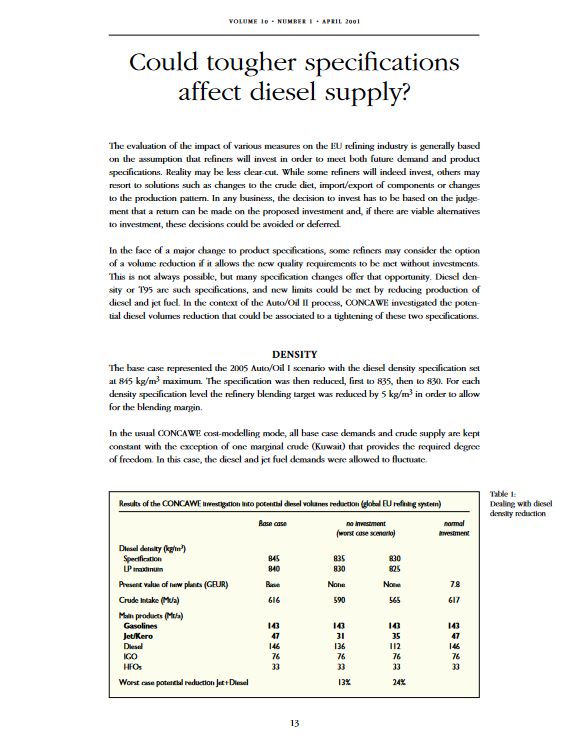
The evaluation of the impact of various measures on the EU refining industry is generally based on the assumption that refiners will invest in order to meet both future demand and product specificat...
Concawe Reviews
Dangerous Preparations Directive
Directive 1999/45/EC, the revised Dangerous Preparation Directive (DPD), has recently replaced the original Directive 88/379/EEC. The scope of the DPD has been expanded to include environmental classi...
Concawe Reviews
Hearing trends in noiseexposed oil refinery workers
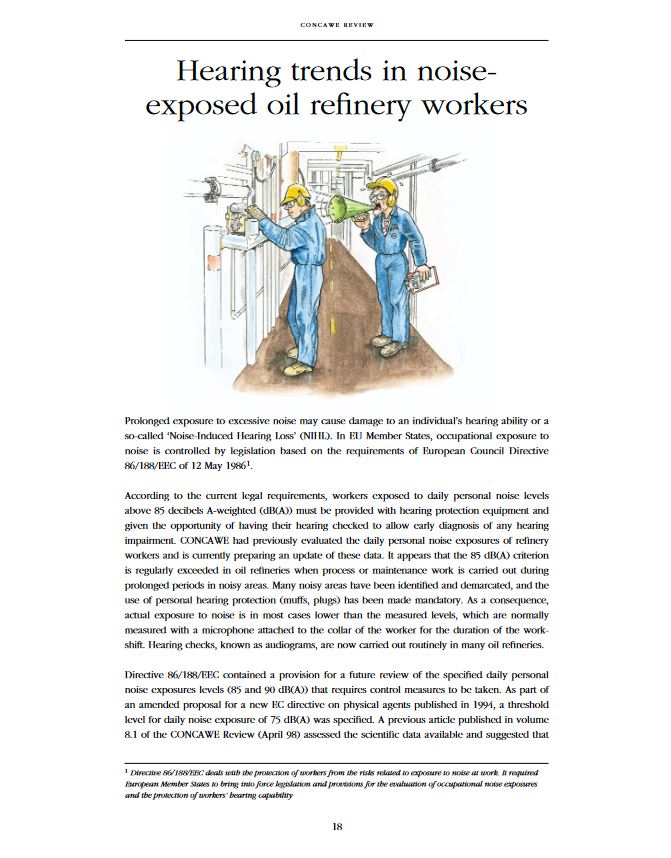
Prolonged exposure to excessive noise may cause damage to an individual’s hearing ability or a so-called ‘Noise-Induced Hearing Loss’ (NIHL). In EU Member States, occupational exposure to noise...
Concawe Reviews
Integrity of oil pipelines in Western Europe
The CONCAWE pipeline statistics now includes data from 72 companies and other bodies operating oil pipelines in Western Europe. These organizations operate some 250 different service pipelines which...
Concawe Reviews
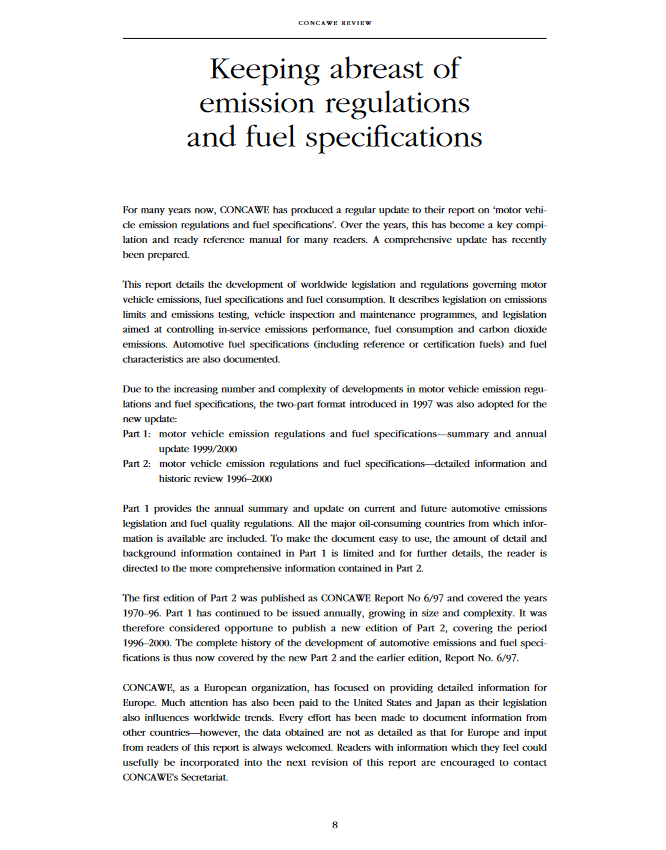
Keeping abreast of emission regulations and fuel specifications
For many years now, CONCAWE has produced a regular update to their report on ‘motor vehicle emission regulations and fuel specifications’.
Over the years, this has become a key compilation an...
Concawe Reviews
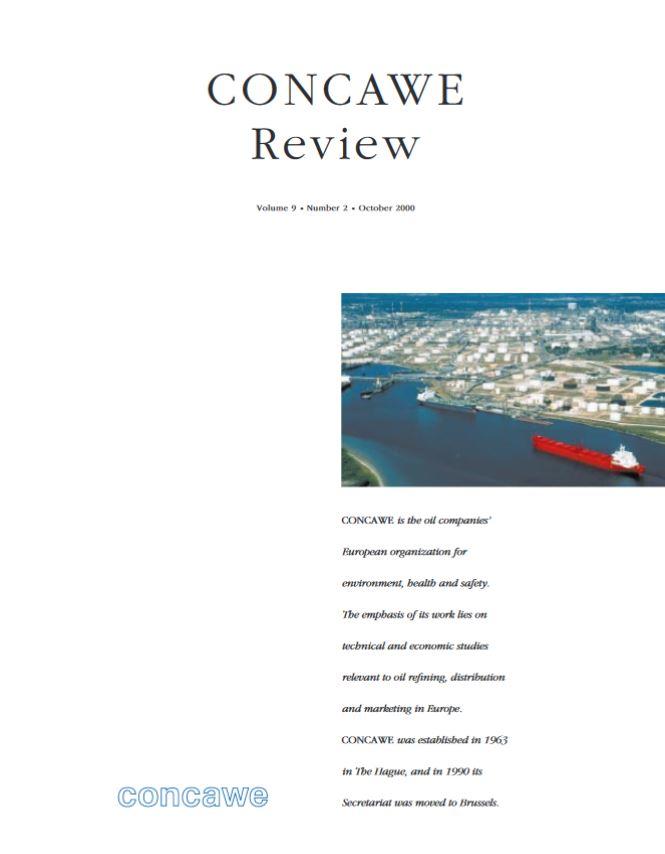
CONCAWE Review 2 – Autumn 2000
Volume 9 • Number 2: This edition of the Review covers a wide range of topics highlighting the diversity of CONCAWE’s work in the areas of environment, health and safety.The majority of the articl...
Concawe Reviews
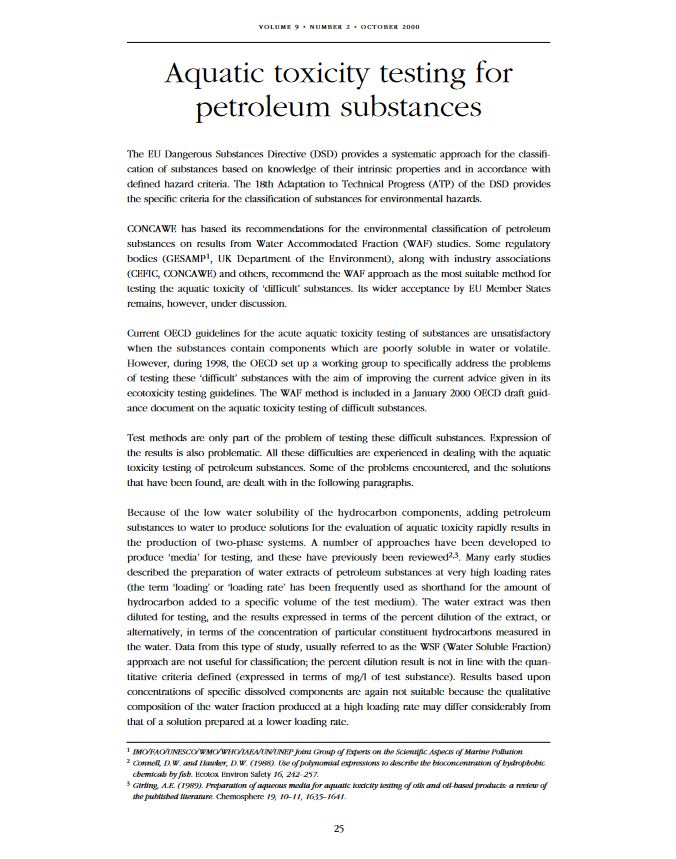
Aquatic toxicity testing for petroleum substances
The EU Dangerous Substances Directive (DSD) provides a systematic approach for the classification of substances based on knowledge of their intrinsic properties and in accordance with defined hazard...
Concawe Reviews
Automotive particulate emissions
Particulate matter (PM) in the air continues to be the focus of increased attention due to concerns over potential health effects. Under the EU Air Quality Framework Directive an air quality standard...
Concawe Reviews
Emission control at marine terminals
The European ‘Stage 1’ Directive 94/63/EC on the control of volatile organic compound (VOC) emissions mandates the installation of vapour emission controls for automotive gasoline storage and lo...

Concawe Reviews
Is a 10-ppm sulphur limit on road fuels desirable?
The German government proposal for the introduction of road fuels with less than 10 ppm sulphur issued at the end of last year re-launched the debate on the sulphur issue. In the meantime, the auto...
Concawe Reviews
Regional ozone in Europe
Over the past three years, both the European Commission and the United Nations Economic Commission for Europe (UN-ECE) have developed response strategies to combat concerns over acidification, eutro...