Blends of gasoline, diesel fuel and ethanol (“dieseline”) have shown promise in engine studies examining low temperature combustion using compression ignition. They offer the possibility of high efficiency combined with low emissions of oxides of nitrogen and soot....
JRC (the Joint Research Centre of the European Commission), EUCAR and Concawe have updated their joint evaluation of the Well-to-Wheels energy use and greenhouse gas (GHG) emissions for a wide range of potential future fuel and powertrain options, first published in...
Report no. 17/20: The long-term goal of the EU is the ambition of climate neutrality by 2050 (EU Energy Roadmap 2050). As an introduction to reach this target, vehicle efficiency targets for passenger cars and light commercial vehicles have been defined in Regulation...
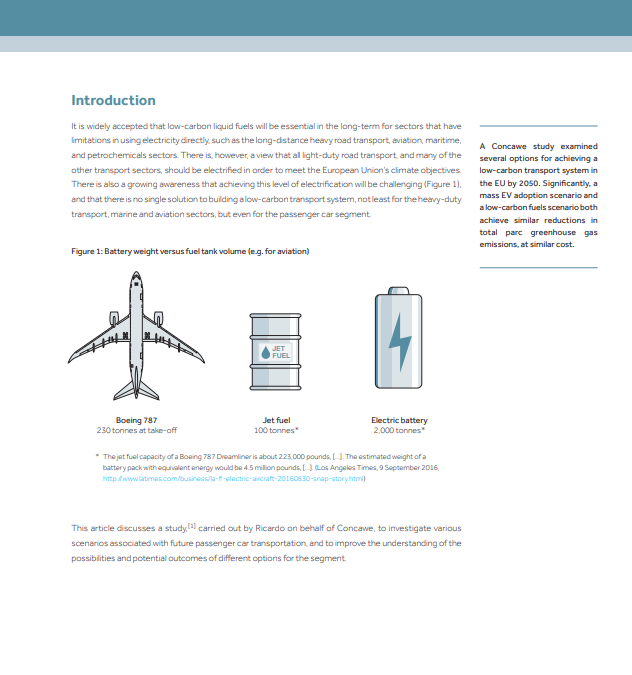
A Concawe study examined several options for achieving a low-carbon transport system in the EU by 2050. Significantly, a mass EV adoption scenario and a low-carbon fuels scenario both achieve similar reductions in total parc greenhouse gas emissions, at similar...
Improvements in vehicle efficiency will be a key factor in ensuring that liquid fuels remain a vital partner in the future of road transport. This article looks at the role of high-octane petrol (HOP) in improving engine efficiency, and summarises the findings of a...