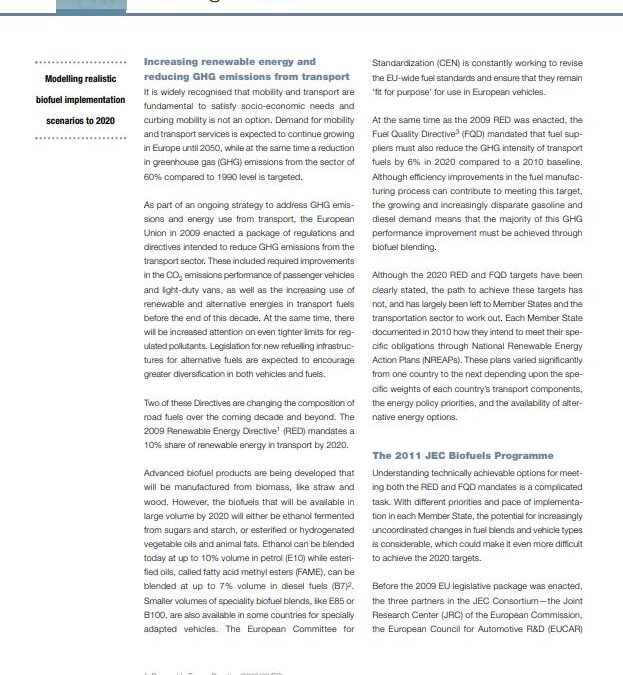
Increasing renewable energy and reducing GHG emissions from transport It is widely recognised that mobility and transport are fundamental to satisfy socio-economic needs and curbing mobility is not an option. Demand for mobility and transport services is expected to...
This is a joint study by EUCAR / JRC / CONCAWE. Study Objectives: Establish, in a transparent and objective manner, a consensual well-to-wheels energy use and GHG emissions assessment of a wide range of automotive fuels and powertrains relevant to Europe in 2010 and...
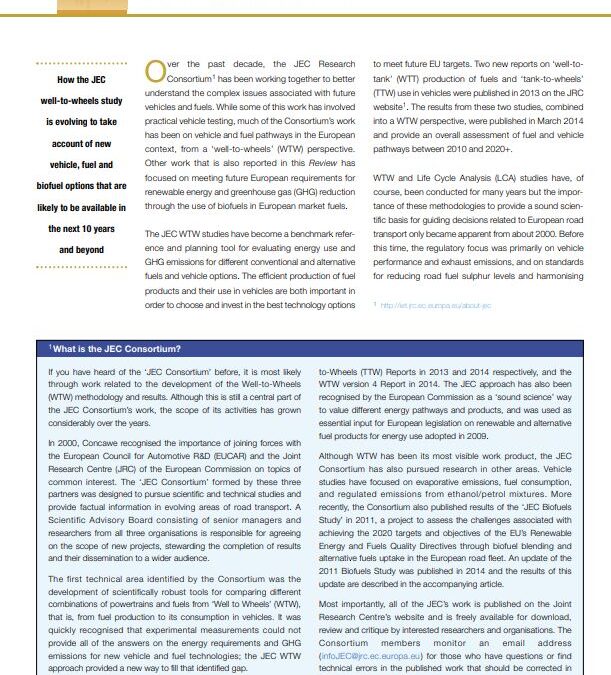
Over the past decade, the JEC Research Consortium1 has been working together to better understand the complex issues associated with future vehicles and fuels. While some of this work has involved practical vehicle testing, much of the Consortium’s work has been on...
Report no. 4/14: A structured survey of European consumers was carried out across 250 participants to better understand their habits and practices concerning their use of vehicle fuels and lubricants. This report contains the findings of the survey. The information...
Report no. 13/13: Ethanol, at low concentrations in motor gasoline, is known to impact both the fuel consumption and emissions from vehicles. Because ethanol has a lower energy content per litre compared to conventional hydrocarbon gasoline, a vehicle’s...