Report no. 2/12: A six vehicle study has been completed to investigate the impact of changes in the volatility characteristics of unleaded gasoline containing 10% v/v ethanol on regulated exhaust and evaporative emissions and on hot and cold weather vehicle...
Over the past decade, biofuels have become part of the road fuel supply, driven by legislation aimed at reducing the carbon footprint of road transport. The EU has led the way, first with an indicative target for biofuels blending in 2003, and subsequently with the...
Passenger cars in many parts of the world are now routinely operating on blends of oxygenated molecules and gasoline. Both ethanol and ethers, such as ethyl tertiary-butyl ether (ETBE), are being used in Europe in order to improve vehicle emissions performance and...
For many years, it has been recognised that energy demand and greenhouse gas (GHG) emissions from the transportation sector are expected to rise over the coming decades, with increasing demand for passenger and freight transport offsetting efficiency gains. In fact,...
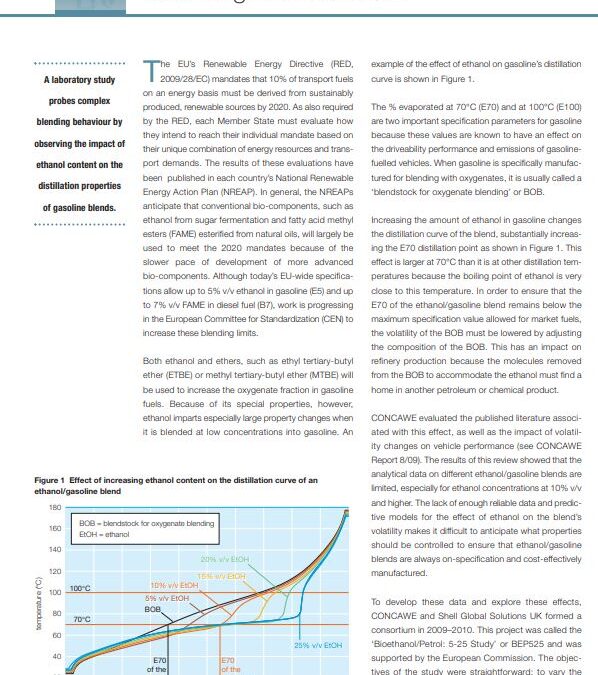
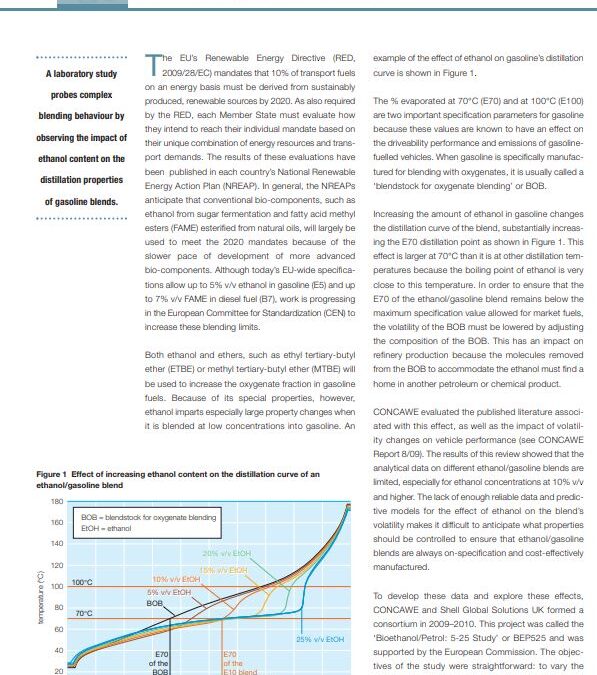
The EU’s Renewable Energy Directive (RED, 2009/28/EC) mandates that 10% of transport fuels on an energy basis must be derived from sustainably produced, renewable sources by 2020. As also required by the RED, each Member State must evaluate how they intend to reach...