Report no. 1/06: Information is presented on inhalation and dermal exposures to gas oils for workers in European manufacturing and distribution operations and for consumers, for use in substance risk assessment according to EU regulations. Similar, but more...
Report no. 8/05: The cost and CO2 emissions associated with the reduction of sulphur in EU road fuels have been evaluated using the CONCAWE EU refining model. The results are compared to those of a similar study carried out in 2000. In order to reduce sulphur in road...
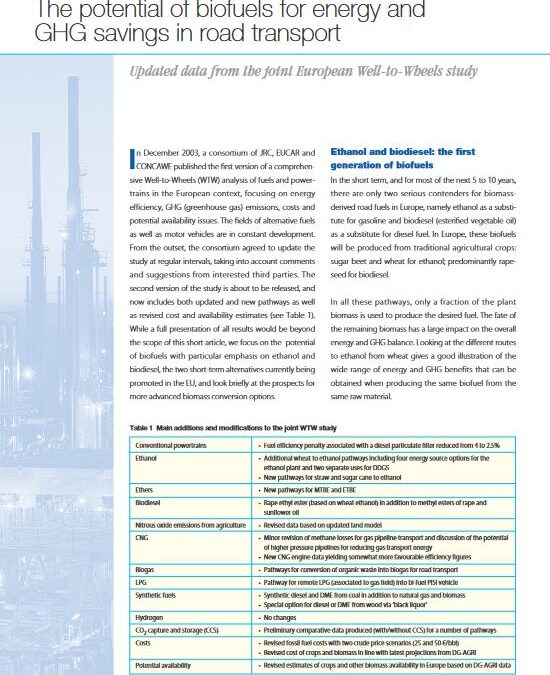
In December 2003, a consortium of JRC, EUCAR and CONCAWE published the first version of a comprehensive Well-to-Wheels (WTW) analysis of fuels and powertrains in the European context, focusing on energy efficiency, GHG (greenhouse gas) emissions, costs and potential...
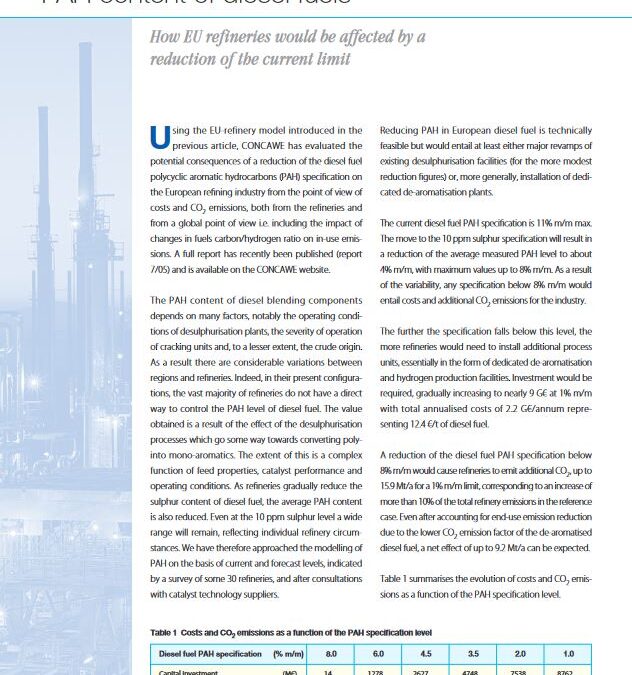
Using the EU-refinery model introduced in the previous article, CONCAWE has evaluated the potential consequences of a reduction of the diesel fuel polycyclic aromatic hydrocarbons (PAH) specification on the European refining industry from the point of view of costs...
For many years CONCAWE has maintained a model of the European refining system in order to be able to evaluate the potential impact of major changes, such as more stringent product specifications or shifts in crude supply and/or product demand patterns. Although the...