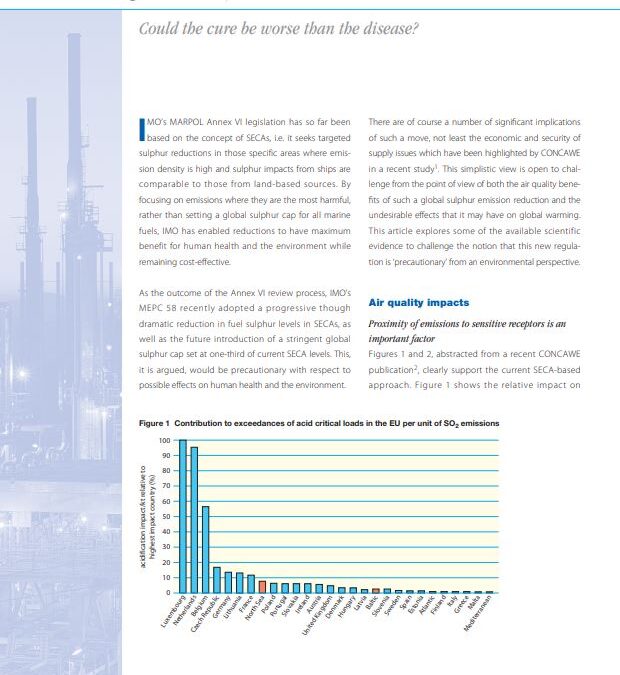
IMO’s MARPOL Annex VI legislation has so far been based on the concept of SECAs, i.e. it seeks targeted sulphur reductions in those specific areas where emission density is high and sulphur impacts from ships are comparable to those from land-based sources....
Air pollutant emissions from motor vehicles have fallen dramatically over the past two decades as a result of continuing improvements in engine and after treatment technologies to meet lower regulated emissions limits, and in the quality of fuel used to power these...
Ultra-low sulphur fuels have enabled the introduction of modern engine and after-treatment technologies in order to meet increasingly stringent exhaust emissions limits. Through these improvements, substantial reductions in road vehicle emissions have occurred over...
European road traffic has increased dramatically over the past several decades and the same growth is now being seen in many other parts of the world. This increased demand has brought new challenges for the vehicle and fuel industries, especially the need to lower...
The current focus on climate issues and, more specifically, greenhouse gas (GHG) emissions is generating much debate regarding emission sources and reduction options. Oil refineries are amongst the so-called ‘energy-intensive industries that do emit large quantities...