Much discussion has taken place in Auto/Oil-I, Auto/Oil-II and many other forums on how to achieve air quality targets in a scientific and cost-effective way. The basis is sound science, starting with a thorough understanding of the adverse health effects of air...
The risk assessment of chemical substances is based on a comparison of the potential adverse effects of a substance at given concentrations with the known or foreseeable exposure for man and the environment. Identification of the intrinsic hazards of a substance...
Mobile phones have rapidly become one of the necessities of modern life, allowing people to keep in touch with each other at all times. As we all know, they can also be annoying when they ring at inappropriate times; even CONCAWE meetings now suffer from this problem!...
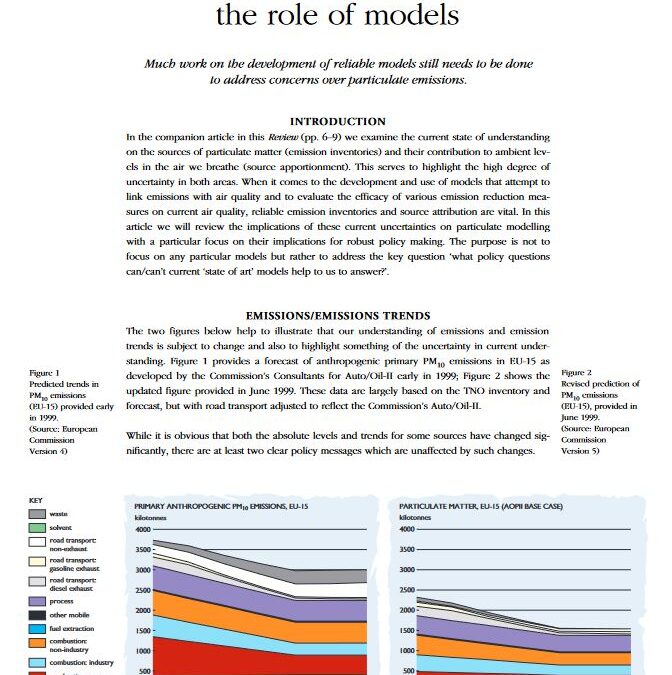
In the companion article in this Review (pp. 6–9) we examine the current state of understanding on the sources of particulate matter (emission inventories) and their contribution to ambient levels in the air we breathe (source apportionment). This serves to highlight...
The quality of the air we breathe has become an increasingly important and emotive issue over the past few years. To date, the regulation of air quality has focused mainly on outdoor air (even though for particular pollutants, indoor concentrations may be greater and...