Volume 18 • Number 1: When Concawe’s director joined CONCAWE in late 2004, he took the helm of an organisation which had already proved its value to the oil industry through more than 40 years of technical contributions, and whose credibility and professionalism...
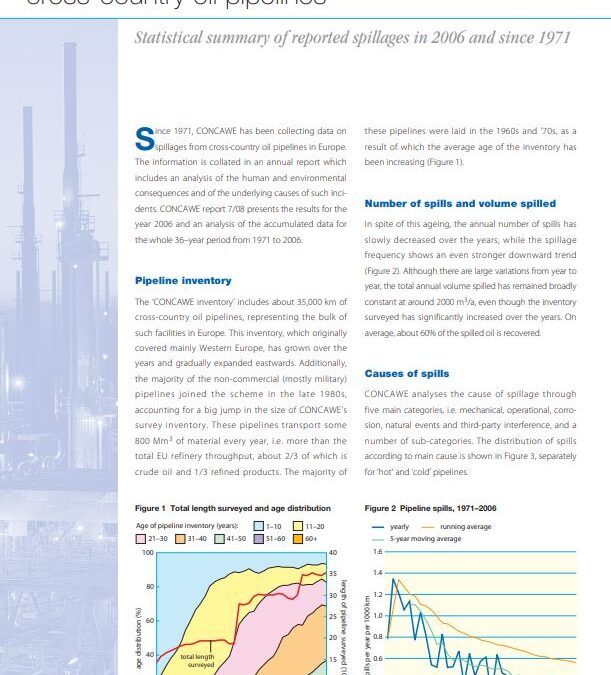
Since 1971, CONCAWE has been collecting data on spillages from cross-country oil pipelines in Europe. The information is collated in an annual report which includes an analysis of the human and environmental consequences and of the underlying causes of such incidents....
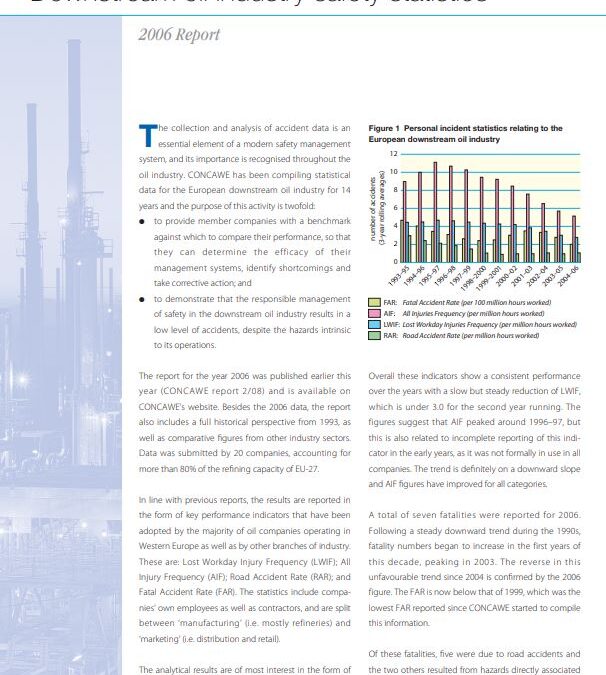
The collection and analysis of accident data is an essential element of a modern safety management system, and its importance is recognised throughout the oil industry. CONCAWE has been compiling statistical data for the European downstream oil industry for 14 years...
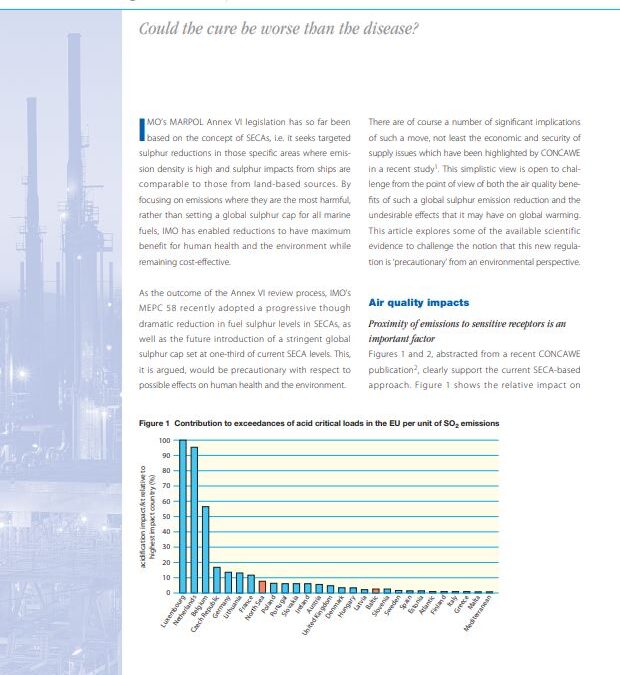
IMO’s MARPOL Annex VI legislation has so far been based on the concept of SECAs, i.e. it seeks targeted sulphur reductions in those specific areas where emission density is high and sulphur impacts from ships are comparable to those from land-based sources....
Volume 17 • Number 2: The implementation process of the REACH legislation is fast approaching the registration phase. CONCAWE is working hard with its members to prepare the registration dossiers, a challenging proposition in view of the tight time schedule and with...