Concawe
  • Home
  • About us
    • Who are we
    • Our Mission
    • Governance
    • Secretariat
    • Organisation & Structure
    • Membership
    • Vacancies
    • Videos
  • Publications
  • Topics
    • Environmental Impact
    • Health Impact
    • Products and Use
    • Manufacturing and Feedstocks
    • REACH
    • Safety
  • Maps
    • Refineries and Biorefineries Map
  • Tools
    • PETRORISK
    • PETROTOX
    • Concawe NO2 Viewer
  • Events
    • Upcoming Events
    • Past Events
  • Members Only
  • SIEF Space
  • Rate this website
Select Page
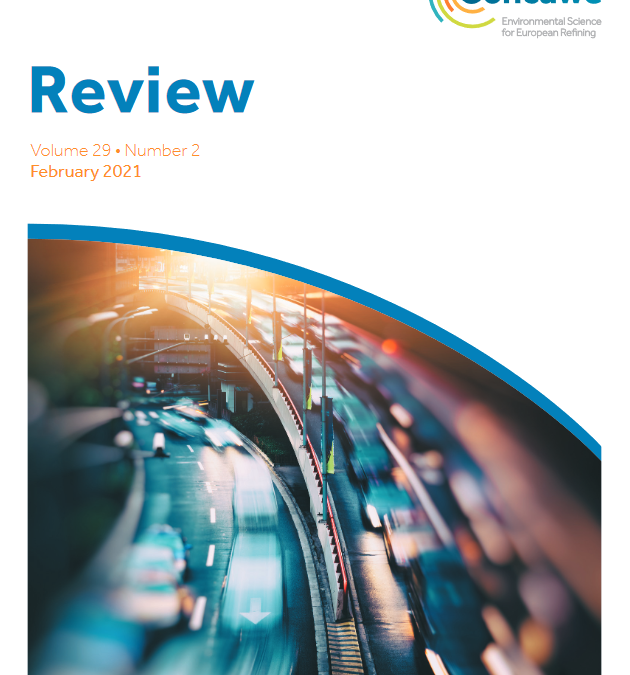
JEC Well-to-Wheels study version 5: a look into the carbon intensity of different fuel/powertrain combinations in 2030 (Concawe Review 29.2)

JEC Well-to-Wheels study version 5: a look into the carbon intensity of different fuel/powertrain combinations in 2030 (Concawe Review 29.2)

Feb 17, 2021

Version 5 of the JEC evaluation of well-to-wheels energy use and greenhouse gas emissions for a range of potential future fuel and powertrain options has now been completed. Full details are available online via the JEC consortium website. This article provides an...
A review of the options for decarbonising maritime transport by 2050 (Concawe Review 29.2)

A review of the options for decarbonising maritime transport by 2050 (Concawe Review 29.2)

Feb 17, 2021

This article summarises Phase 1 of a new research project being undertaken by Concawe to investigate potential technological, operational and energy pathways to reduce emissions from the maritime transport sector towards 2050. Phase 1 of the project provides the...
Impact analysis of mass EV adoption and low-carbon intensity fuels scenarios (Concawe Review 27.2)

Impact analysis of mass EV adoption and low-carbon intensity fuels scenarios (Concawe Review 27.2)

Jul 8, 2020

A Concawe study examined several options for achieving a low-carbon transport system in the EU by 2050. Significantly, a mass EV adoption scenario and a low-carbon fuels scenario both achieve similar reductions in total parc greenhouse gas emissions, at similar...
High-octane petrol (HOP) study: making gasoline relevant for the future of road transport (Concawe Review 28.1)

High-octane petrol (HOP) study: making gasoline relevant for the future of road transport (Concawe Review 28.1)

Jul 8, 2020

Improvements in vehicle efficiency will be a key factor in ensuring that liquid fuels remain a vital partner in the future of road transport. This article looks at the role of high-octane petrol (HOP) in improving engine efficiency, and summarises the findings of a...
Running high-octane petrol in a suitably adapted engine (Concawe Review 29.1)

Running high-octane petrol in a suitably adapted engine (Concawe Review 29.1)

Jul 8, 2020

Concawe’s modelling and vehicle testing study shows that fuels and vehicles can be optimised together to take advantage of higher-RON fuels, and achieve significant improvements in efficiency and CO2 emissions.
Page 10 of 64«1234567891011121314151617181920...405060...»Last »

©CONCAWE 2025 – Disclaimer Privacy Policy Cookies Policy Terms of use Privacy Centre Competition Law Policy Guidelines Contact us

×