Over the years, and particularly in the past decade, European motor fuel specifications have changed dramatically. This has followed a general trend, supported mainly by concerns about the effect of road traffic on urban air quality. The USA, and more specifically...
Over the past year, many new initiatives have been launched in the area of sustainable transport. The EU Commission’s ‘White Paper’ on European Transport Policy was issued in 2001, followed by initiatives on biofuels, other ‘renewable’ fuels and diversification...
Report no. 2/02: Recent literature publications have been used to estimate the energy and greenhouse gas balance of the most relevant biofuels in Europe, i.e. ethanol and Rapeseed Methyl Ester (RME). The potential for biofuels to substitute conventional fuels on the...
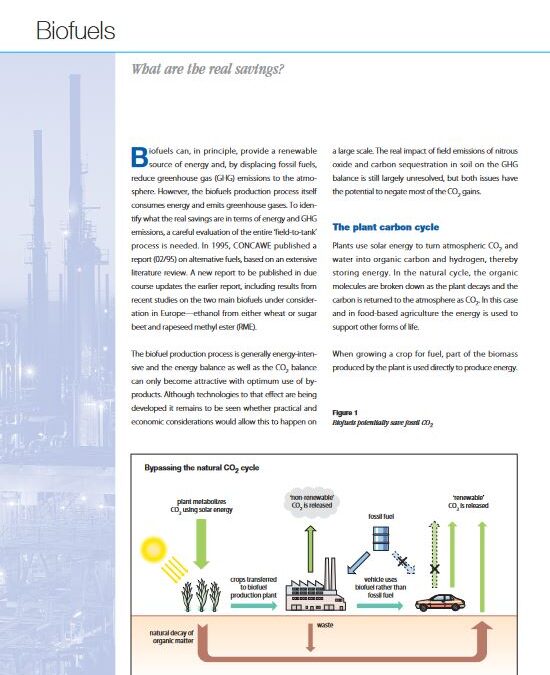
Biofuels can, in principle, provide a renewable source of energy and, by displacing fossil fuels, reduce greenhouse gas (GHG) emissions to the atmosphere. However, the biofuels production process itself consumes energy and emits greenhouse gases. To identify what the...
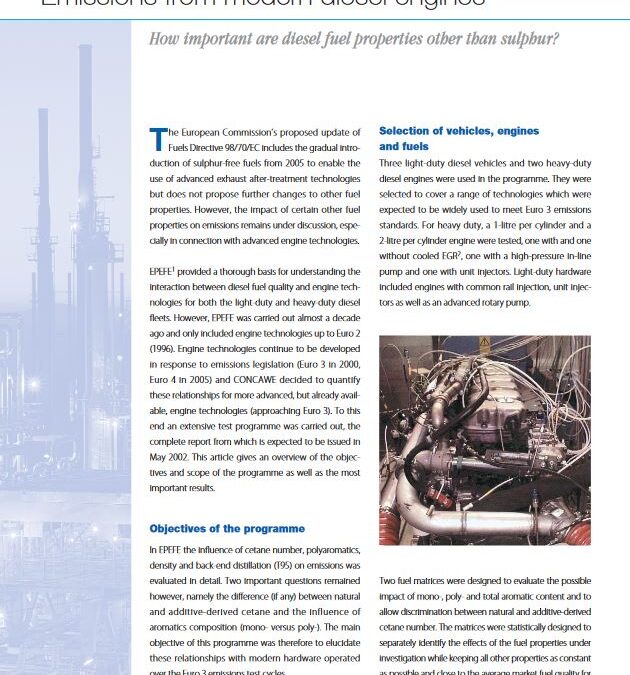
The European Commission’s proposed update of Fuels Directive 98/70/EC includes the gradual introduction of sulphur-free fuels from 2005 to enable the use of advanced exhaust after treatment technologies but does not propose further changes to other fuel properties....