
Concawe
  • Home
  • About us
    • Who are we
    • Our Mission
    • Governance
    • Secretariat
    • Organisation & Structure
    • Membership
    • Vacancies
    • Videos
  • Publications
  • Topics
    • Environmental Impact
    • Health Impact
    • Products and Use
    • Fuel Manufacturing and Feedstocks
    • REACH
    • Safety
  • Maps
    • Refineries and Biorefineries Map
  • Tools
    • PETRORISK
    • PETROTOX
    • Concawe NO2 Viewer
    • Persistence Assessment Tool
    • The Hydrocarbon Biodegradation System-integrated Model
    • The Bioaccumulation Assessment Tool
    • Cars CO₂ Comparator
    • HDV CO₂ Comparator
  • Events
    • Upcoming Events
    • Past Events
  • Members Only
  • SIEF Space
  • Rate this website
Select Page
Joint Industry Guidance on the supply and use of 0.50%-sulphur marine fuel

Joint Industry Guidance on the supply and use of 0.50%-sulphur marine fuel

Aug 27, 2019

In October 2016, the International Maritime Organization (IMO) confirmed a global limit for sulphur in fuel oil used on board ships of 0.50% m/m (mass by mass) to become effective on 1 January 2020. The implementation of this regulation will have far-reaching...
Phase 2: Effect of Fuel Octane on the Performance of Four Euro 5 and Euro 6 Gasoline Passenger Cars

Phase 2: Effect of Fuel Octane on the Performance of Four Euro 5 and Euro 6 Gasoline Passenger Cars

Aug 6, 2019

Report no. 7/19: Research Octane Number (RON) and Motor Octane Number (MON) are used to describe gasoline combustion antiknock performance under different conditions. Recent literature suggests that MON is less important than RON in modern cars due to a move towards...
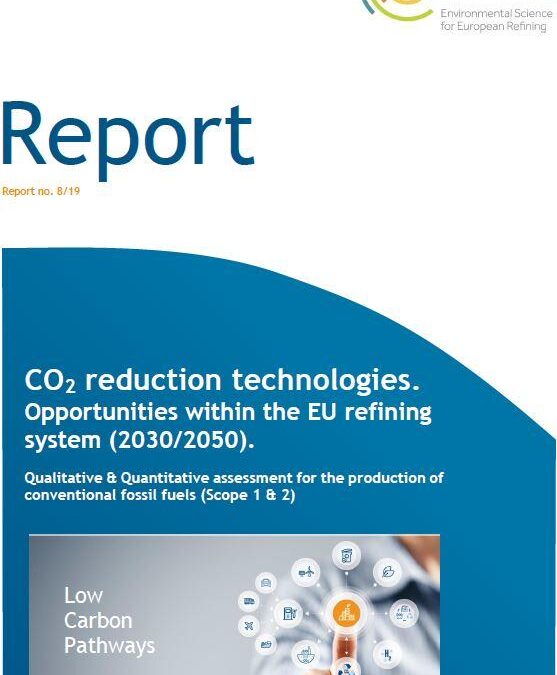
CO2 reduction technologies. Opportunities within the EU refining system (2030/2050). Qualitative & Quantitative assessment for the production of conventional fossil fuels (Scope 1 & 2)

CO2 reduction technologies. Opportunities within the EU refining system (2030/2050). Qualitative & Quantitative assessment for the production of conventional fossil fuels (Scope 1 & 2)

Jul 16, 2019

Report no. 8/19: This report describes the work being conducted by Concawe with the objective to explore a range of Low Carbon Pathways with the potential to reduce the CO2 emissions associated with the production of refined oil products. This document demonstrates...
Low Carbon Pathways Until 2050 – Deep Dive on Heavy Duty Transportation (FEV report)

Low Carbon Pathways Until 2050 – Deep Dive on Heavy Duty Transportation (FEV report)

Jul 8, 2019

The European Commission calls for a climate-neutral Europe by 2050, which is in-line with the goals of the Paris Agreement. One element of reaching a carbon-neutral economy is to reduce greenhouse gas emissions. Within the economy, the transport sector accounted for...
Effect of Diesel Fuel Properties on Fuel Economy and Emissions of Three Passenger Cars

Effect of Diesel Fuel Properties on Fuel Economy and Emissions of Three Passenger Cars

Apr 8, 2019

Report no. 2/19: The objective of this project was to assess the effects of varying diesel fuel properties associated with increasing FAME content on pollutant emissions and fuel consumption of light-duty vehicles. To that aim three passenger cars were tested, each...
Page 14 of 52« First«...56789101112131415161718192021222324...4050...»Last »

©CONCAWE 2026 – Disclaimer Privacy Policy Cookies Policy Terms of use Privacy Centre Competition Law Policy Guidelines Contact us

×