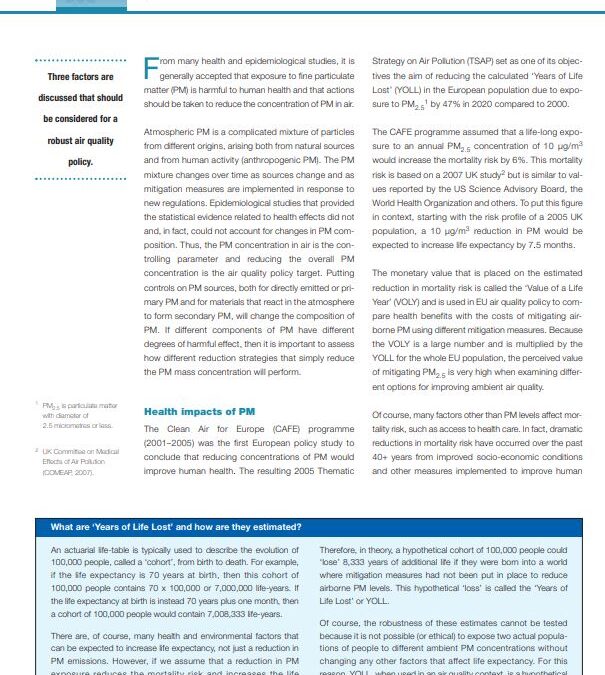
From many health and epidemiological studies, it is generally accepted that exposure to fine particulate matter (PM) is harmful to human health and that actions should be taken to reduce the concentration of PM in air.
Report no. 4/12: Ether oxygenates are added to certain gasoline (petrol) formulations to improve combustion efficiency and to increase the octane rating. In this report the term gasoline ether oxygenates (GEO) refers collectively to methyl tertiary butyl ether (MTBE),...
Report no. 1/12: Within the EU it is apparent that the regulatory focus on the use of biologically-based effects methods in the assessment of refinery effluents and receiving waters have increased in the past decade. This has been reflected in a recent refinery survey...
Report no. 9/11: This report describes the experimental procedures and results obtained in acuteecotoxicity tests on several heavy fuel oil (HFO) samples. Water accommodated fractions (WAFs) of these samples were tested for toxicity to the rainbow trout (Oncorhynchus...
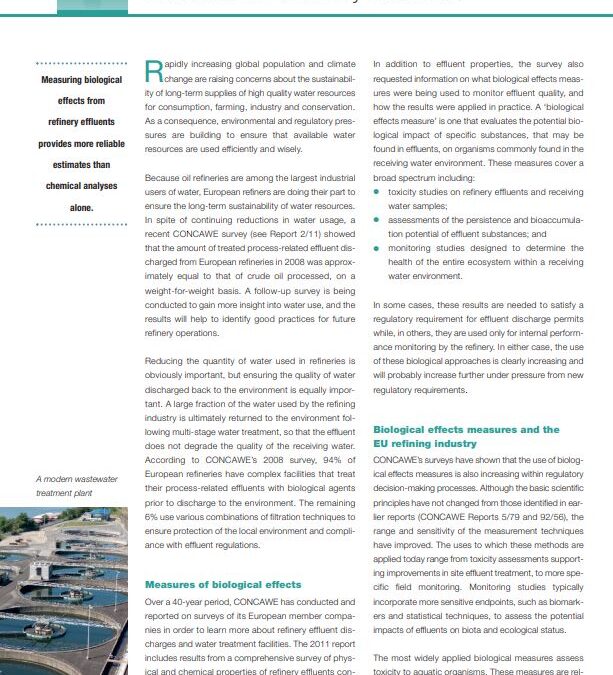
Rapidly increasing global population and climate change are raising concerns about the sustainability of long-term supplies of high quality water resources for consumption, farming, industry and conservation. As a consequence, environmental and regulatory...