Research efforts into advanced emission control systems led to significant reduction of pollutant emissions of modern internal combustion engines. Sustainable renewable fuels are used to further reduce their Well-to-Wheels greenhouse gas emissions. The novel aspect of...
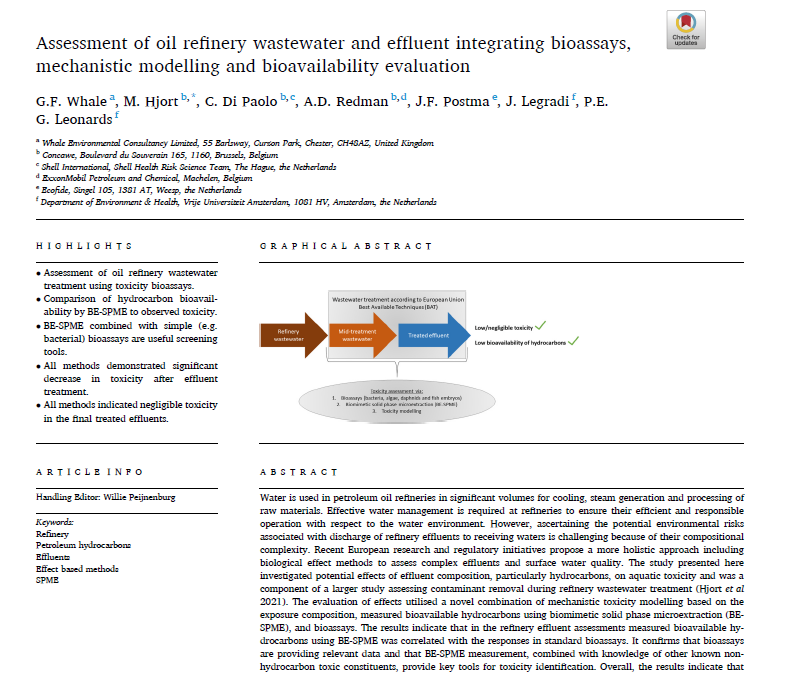
Water is used in petroleum oil refineries in significant volumes for cooling, steam generation and processing of raw materials. Effective water management is required at refineries to ensure their efficient and responsible operation with respect to the water...
Substantial advances in European road vehicle emissions have been achieved over the past three decades driven by strengthening revisions in emissions legislation and enabled by advances in fuel, vehicle engine and emissions control technologies. As both vehicle...
Heterocyclic aromatic compounds can be found in crude oil and coal and often co‐exist in environmental samples with their homocyclic aromatic counterparts. The target lipid model (TLM) is a modeling framework that relates aquatic toxicity to the octanol–water...
Biodegradation kinetics data are keystone for evaluating the environmental persistence and risk of chemicals. Biodegradation kinetics depend highly on the prevailing temperature, which influences microbial community structures, metabolic rates, and chemical...