Concawe
  • Home
  • About us
    • Who are we
    • Our Mission
    • Governance
    • Secretariat
    • Organisation & Structure
    • Membership
    • Vacancies
    • Videos
  • Publications
  • Topics
    • Environmental Impact
    • Health Impact
    • Products and Use
    • Fuel Manufacturing and Feedstocks
    • REACH
    • Safety
  • Maps
    • Refineries and Biorefineries Map
  • Tools
    • PETRORISK
    • PETROTOX
    • Concawe NO2 Viewer
    • Persistence Assessment Tool
    • The Hydrocarbon Biodegradation System-integrated Model
    • The Bioaccumulation Assessment Tool
    • Cars CO₂ Comparator
    • HDV CO₂ Comparator
  • Events
    • Upcoming Events
    • Past Events
  • Members Only
  • SIEF Space
  • Rate this website
Select Page
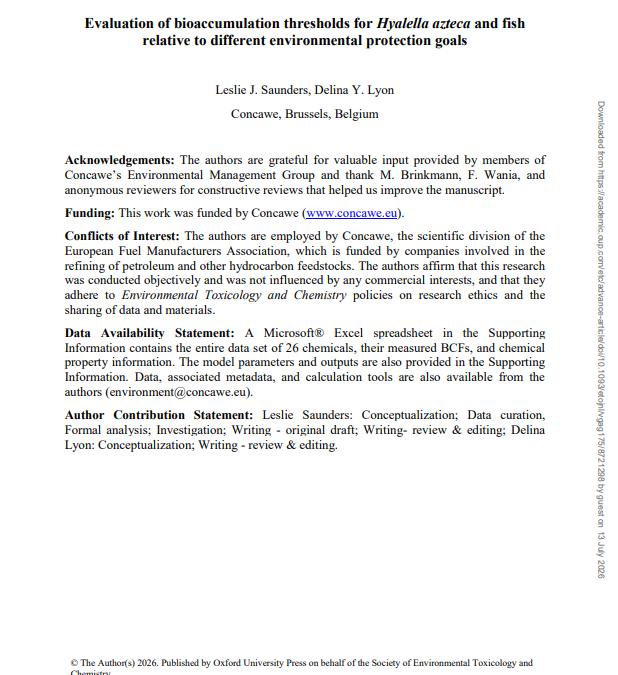
Evaluation of Bioaccumulation Thresholds for Hyalella Azteca and Fish Relative to Different Environmental Protection Goals

Evaluation of Bioaccumulation Thresholds for Hyalella Azteca and Fish Relative to Different Environmental Protection Goals

Jul 13, 2026

Bioaccumulation assessment is a key component of chemical regulations, with fish-based bioconcentration factors (BCFs) serving as the standard metric. Because conventional fish BCF tests (OECD TG 305) require many vertebrates, alternative tests such as the amphipod...
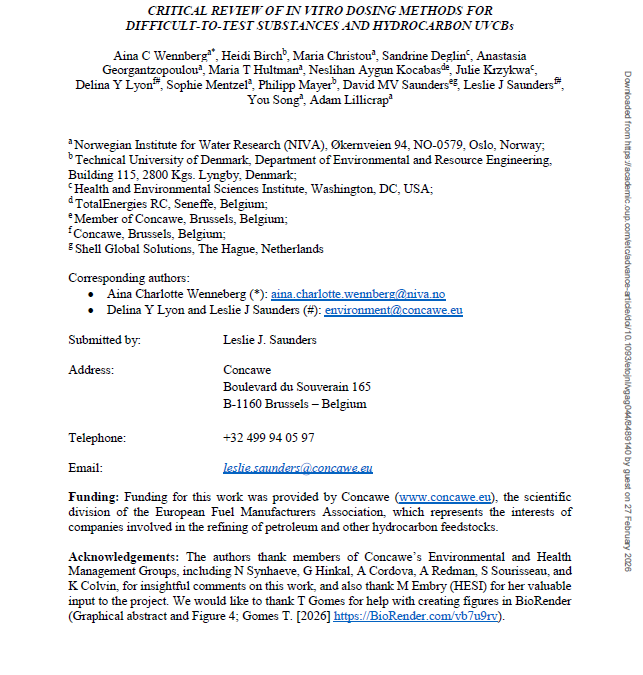
Critical Review of In Vitro Dosing Methods for difficult-to-test Substances and Hydrocarbon UVCBs

Critical Review of In Vitro Dosing Methods for difficult-to-test Substances and Hydrocarbon UVCBs

Feb 27, 2026

Alternative approaches to traditional animal testing are being promoted to support regulatory chemical risk assessments for environment and human health. The Organisation for Economic Development (OECD) has validated some in vitro test methods, but these methods are...
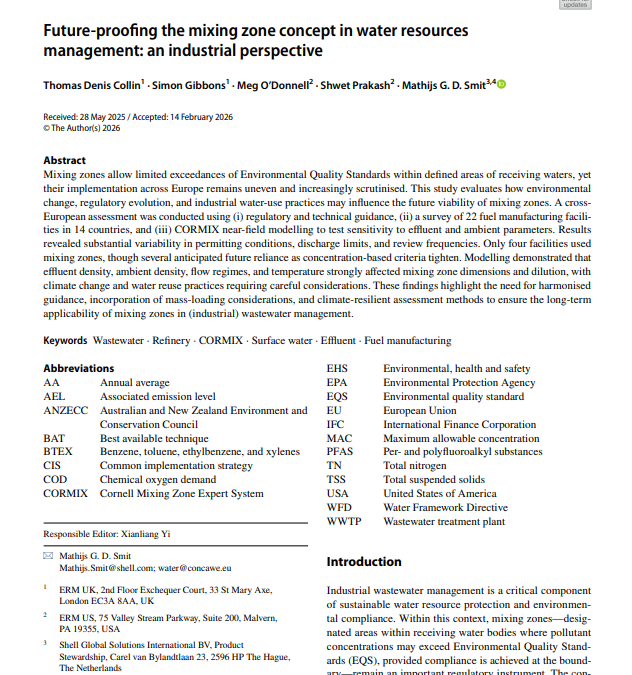
Future‑proofing the mixing zone concept in water resources  management: an industrial perspective

Future‑proofing the mixing zone concept in water resources management: an industrial perspective

Feb 27, 2026

Mixing zones allow limited exceedances of Environmental Quality Standards within defined areas of receiving waters, yet their implementation across Europe remains uneven and increasingly scrutinised. This study evaluates how environmental change, regulatory evolution,...
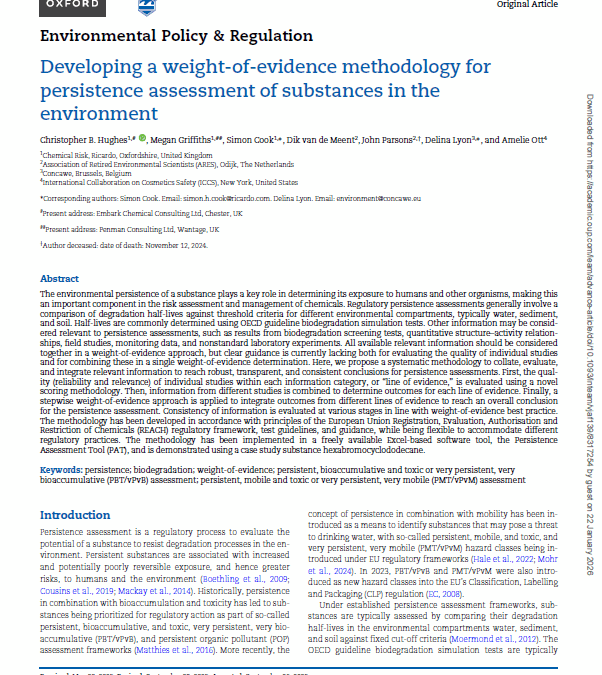
Developing a weight-of-evidence methodology for persistence assessment of substances in the environment

Developing a weight-of-evidence methodology for persistence assessment of substances in the environment

Jan 22, 2026

The environmental persistence of a substance plays a key role in determining its exposure to humans and other organisms, making this an important component in the risk assessment and management of chemicals. Regulatory persistence assessments generally involve a...
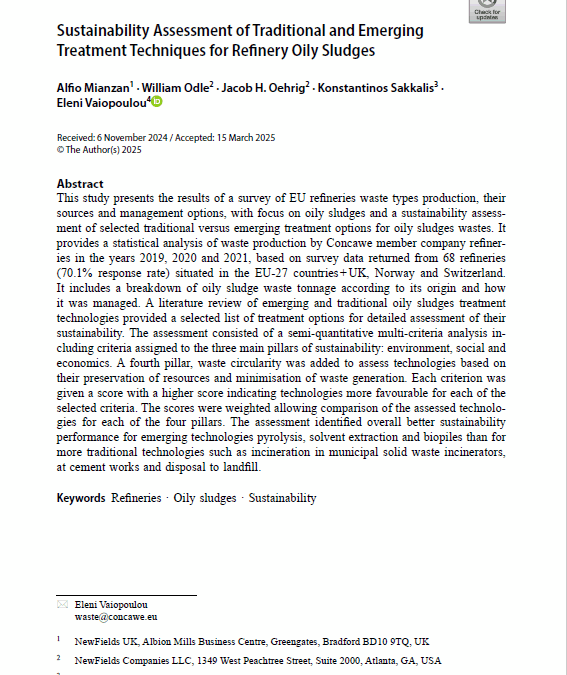
Sustainability Assessment of Traditional and Emerging Treatment Techniques for Refinery Oily Sludges

Sustainability Assessment of Traditional and Emerging Treatment Techniques for Refinery Oily Sludges

May 12, 2025

This study presents the results of a survey of EU refineries waste types production, their sources and management options, with focus on oily sludges and a sustainability assessment of selected traditional versus emerging treatment options for oily sludges wastes. It...

Page 1 of 12123456789101112»

©CONCAWE 2026 – Disclaimer Privacy Policy Cookies Policy Terms of use Privacy Centre Competition Law Policy Guidelines Contact us

×