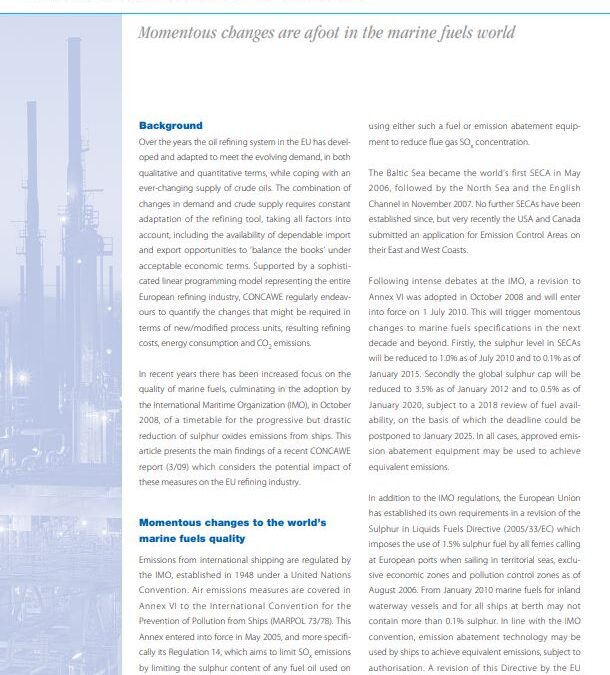
Over the years the oil refining system in the EU has developed and adapted to meet the evolving demand, in both qualitative and quantitative terms, while coping with an ever-changing supply of crude oils. The combination of changes in demand and crude supply requires...
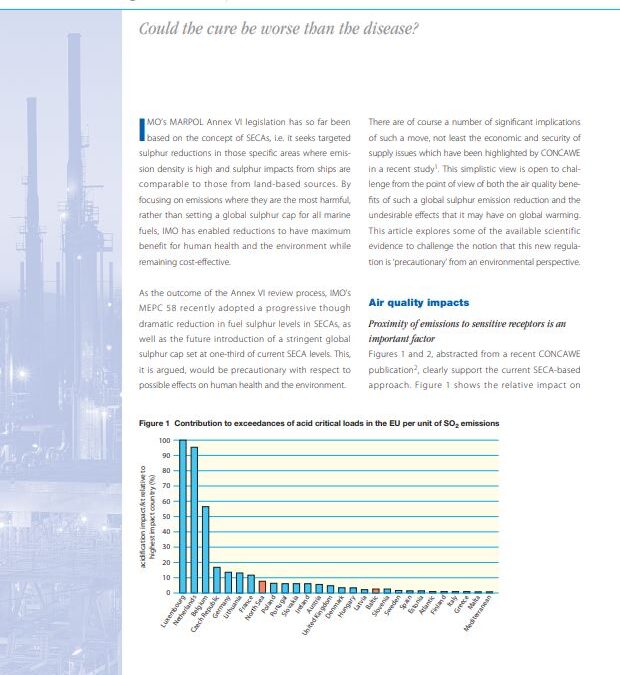
IMO’s MARPOL Annex VI legislation has so far been based on the concept of SECAs, i.e. it seeks targeted sulphur reductions in those specific areas where emission density is high and sulphur impacts from ships are comparable to those from land-based sources....
Report no. 1/07: In the next decade, the EU refining industry will be facing significant changes in demand both in absolute terms and with regard to the relative calls for its main products. Notably, the imbalance between the demand for gasoline and middle distillates...
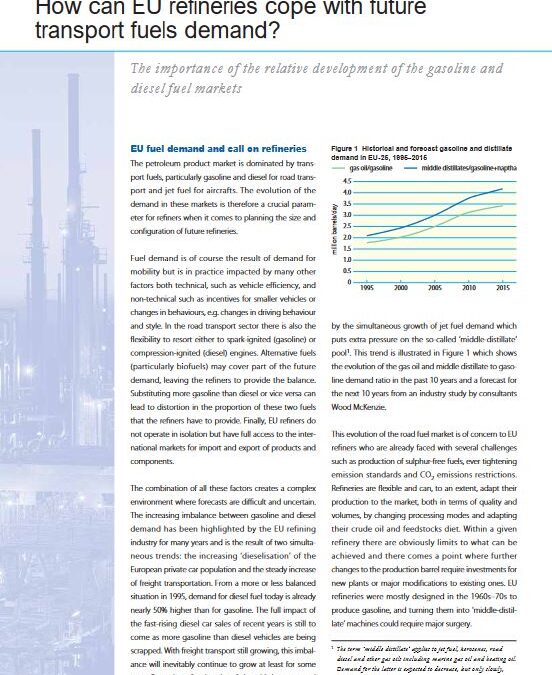
EU fuel demand and call on refineries The petroleum product market is dominated by transport fuels, particularly gasoline and diesel for road transport and jet fuel for aircrafts. The evolution of the demand in these markets is therefore a crucial parameter for...
The legislative context Residual fuel is a commodity used by sea-going vessels the world over. The quality specifications of residual marine or ‘bunker’ fuels (RMF) result essentially from self regulation of the industry and agreements between producers and consumers....