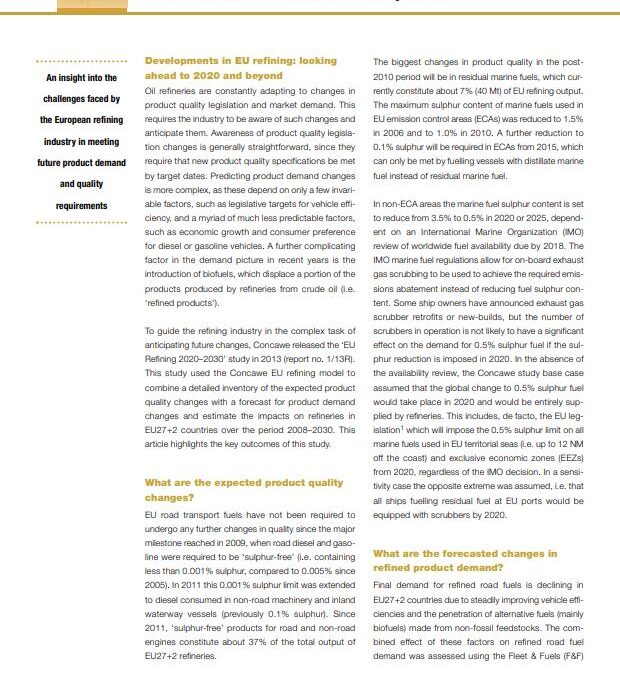
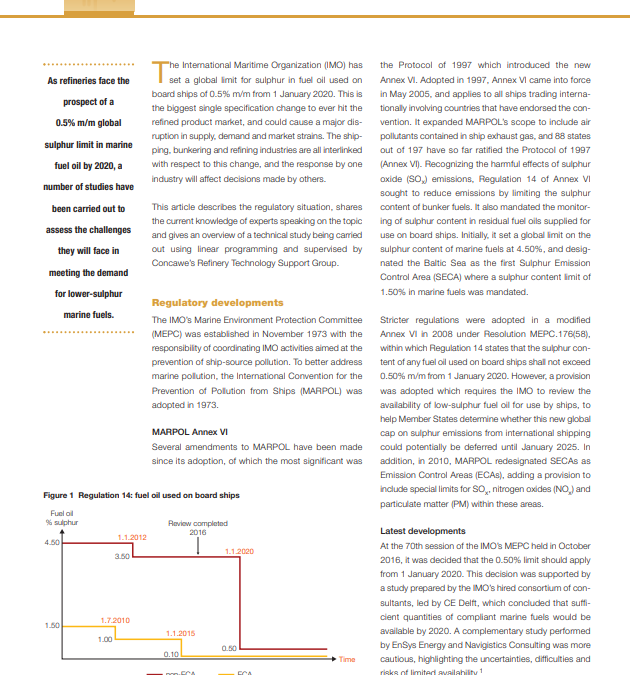
The EU refining industry and the challenge of the IMO global sulphur limit for bunker fuels
As refineries face the prospect of a 0.5% m/m global sulphur limit in marine fuel oil by 2020, a number of studies have been carried out to assess the challenges they will face in meeting the demand for lower-sulphur marine fuels. The bunker residual fuel oil market...
Using forest carbon credits to offset emissions in the downstream business
Report no. 9/17: This report examines if and how forest carbon credits can potentially be used to offset emissions from the EU refining and road transport sectors. Forest carbon projects involve either forestation (capturing CO2 from the atmosphere during the growth...
JEC Biofuels Study: 2014 Update
This report is the result of the JEC Biofuels Programme, a joint study carried out by JRC (the Joint Research Centre of the European Commission), EUCAR (the European Council for Automotive R&D) and CONCAWE (the oil companies’ European association for environment,...