Report no. 5/22: LNAPL stands for “Light Non-Aqueous Phase Liquids” or hydrocarbons that exist as a separate undissolved phase in the subsurface at some sites with legacy releases of fuels. They are referred to as “Light” because most petroleum hydrocarbons are less...
Many factors affect the biodegradation kinetics of chemicals in test systems and the environment. Empirical knowledge is needed on how much test temperature, inoculum, test substances and co-substrates influence the biodegradation kinetics and microbial composition in...
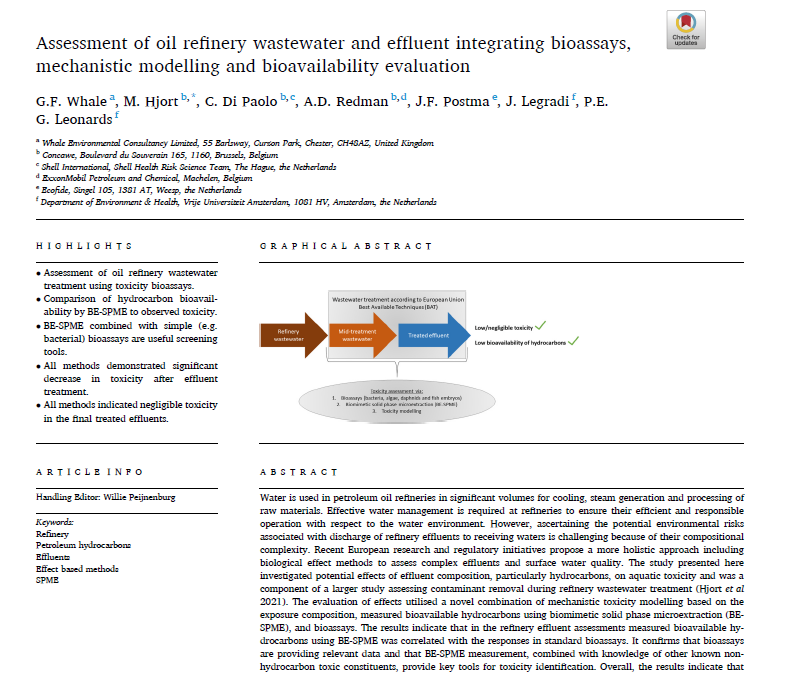
Water is used in petroleum oil refineries in significant volumes for cooling, steam generation and processing of raw materials. Effective water management is required at refineries to ensure their efficient and responsible operation with respect to the water...
Heterocyclic aromatic compounds can be found in crude oil and coal and often co‐exist in environmental samples with their homocyclic aromatic counterparts. The target lipid model (TLM) is a modeling framework that relates aquatic toxicity to the octanol–water...
Biodegradation kinetics data are keystone for evaluating the environmental persistence and risk of chemicals. Biodegradation kinetics depend highly on the prevailing temperature, which influences microbial community structures, metabolic rates, and chemical...