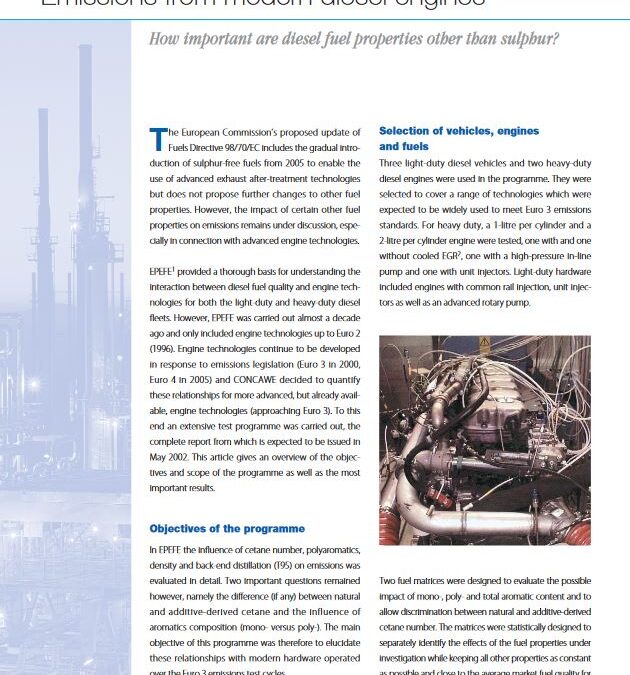
The European Commission’s proposed update of Fuels Directive 98/70/EC includes the gradual introduction of sulphur-free fuels from 2005 to enable the use of advanced exhaust after treatment technologies but does not propose further changes to other fuel properties....
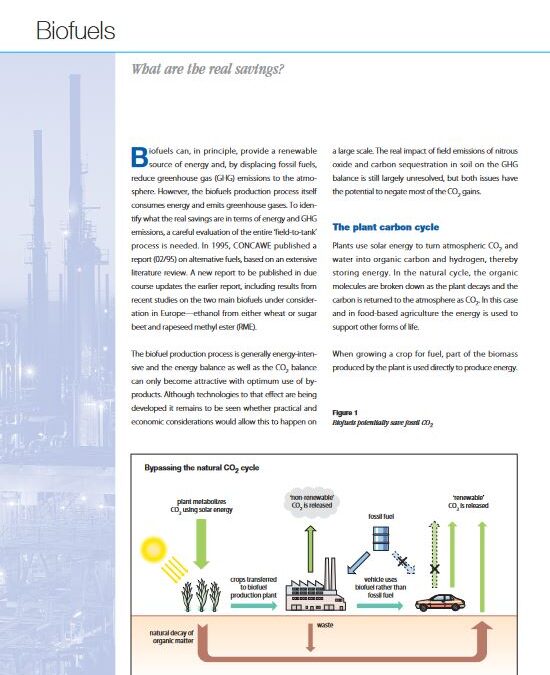
Biofuels can, in principle, provide a renewable source of energy and, by displacing fossil fuels, reduce greenhouse gas (GHG) emissions to the atmosphere. However, the biofuels production process itself consumes energy and emits greenhouse gases. To identify what the...
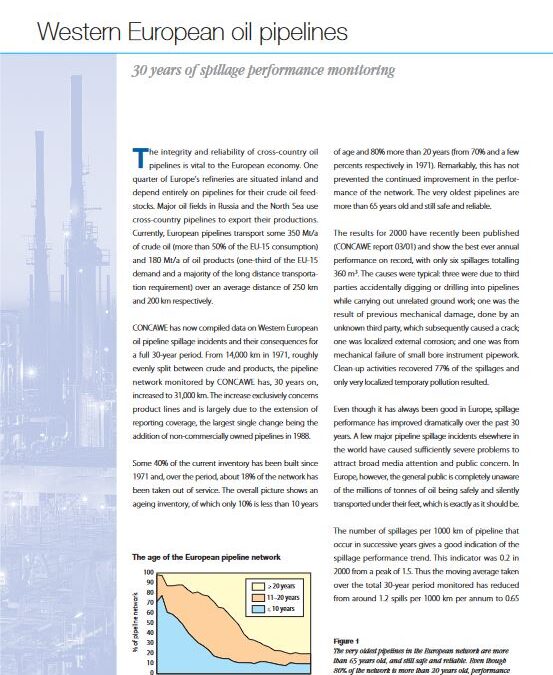
The integrity and reliability of cross-country oil pipelines is vital to the European economy. One quarter of Europe’s refineries are situated inland and depend entirely on pipelines for their crude oil feedstocks. Major oil fields in Russia and the North Sea...
The Integrated Pollution Prevention and Control (IPPC) Directive, adopted in September 1996, requires Member States to issue permits for major industrial installations (such as oil refineries) to promote the use of Best Available Techniques (BAT) for...
In response to concerns over the contribution of international shipping to air pollution, during the 1990s, the International Maritime Organization of the United Nations developed an annex to the MARPOL Convention covering air pollution from ships (Annex VI). This...